Brazil

Institutes
Campinas: University of Campinas – Gleb Wataghin Institute of Physics
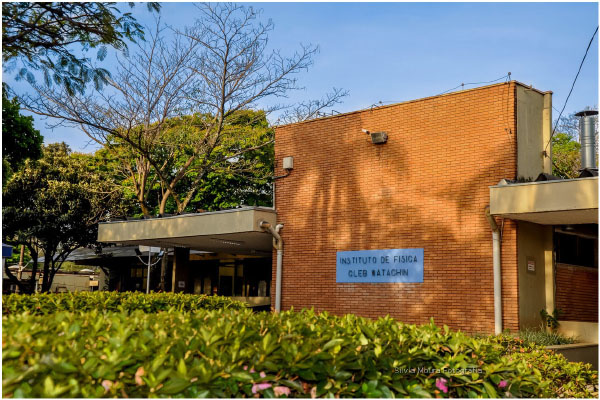
777 Sérgio Buarque de Holanda Street –
Cidade Universitária Zeferino Vaz, Barão Geraldo
Zip code 13083-859 –
Campinas SP,
Brazil
+55 19 3521-5297
Research & Teaching
Founded in 1966, Unicamp (University of Campinas) is a public higher education institution located in the city of Campinas, in São Paulo state, Brazil. The University is primarily funded by the state government as well as national and international funding institutions. Due to its academic excellence and tradition of advanced research in the fields of Science, Technology and Humanities, Unicamp has rapidly become distinguished among traditional institutions both in Brazil and abroad. Unicamp is made up of 24 education and research units divided into 10 institutes and 14 schools. Undergraduate and graduate courses are taught in four major fields of knowledge: Biological and Health Sciences; Basic and Earth Sciences; Humanities, Social Sciences and Arts; and Engineering.
At Unicamp, a world-renowned research institute since its inception, “Gleb Wataghin” Institute of Physics – IFGW is recognized as one of the leading Latin American research centres. IFGW brings together researchers with studies of international impact and is prominent in both basic and applied research. The Institute has played a key role in technological developments in the country, as in the case of optical communications. Many technology companies have been created by IFGW staff and alumni, contributing to Campinas becoming a high-tech centre. IFGW currently has 41 research groups in 4 departments: Quantum Electronics; Applied Physics; Condensed Matter Physics; and Cosmic Rays and Chronology. The research conducted at the Institute is distributed over nearly every field in Physics, from Cosmology and Astrophysics to Quantum Physics, from Photonics and Ultrafast Phenomena to Telecommunications, from Biophysics and Biophotonics and Medical Physics to Nanoscience.
Currently, at Unicamp there are two experimental groups directly participating in activities at the LHC, with ALICE and CMS experiments. Both groups have several research topics being developed within these experiments, including data analysis and participation in detector upgrade projects.
Outreach
Physics Institute Outreach programs
Links & Downloads
Curitiba: UTFPR – Technological Federal University
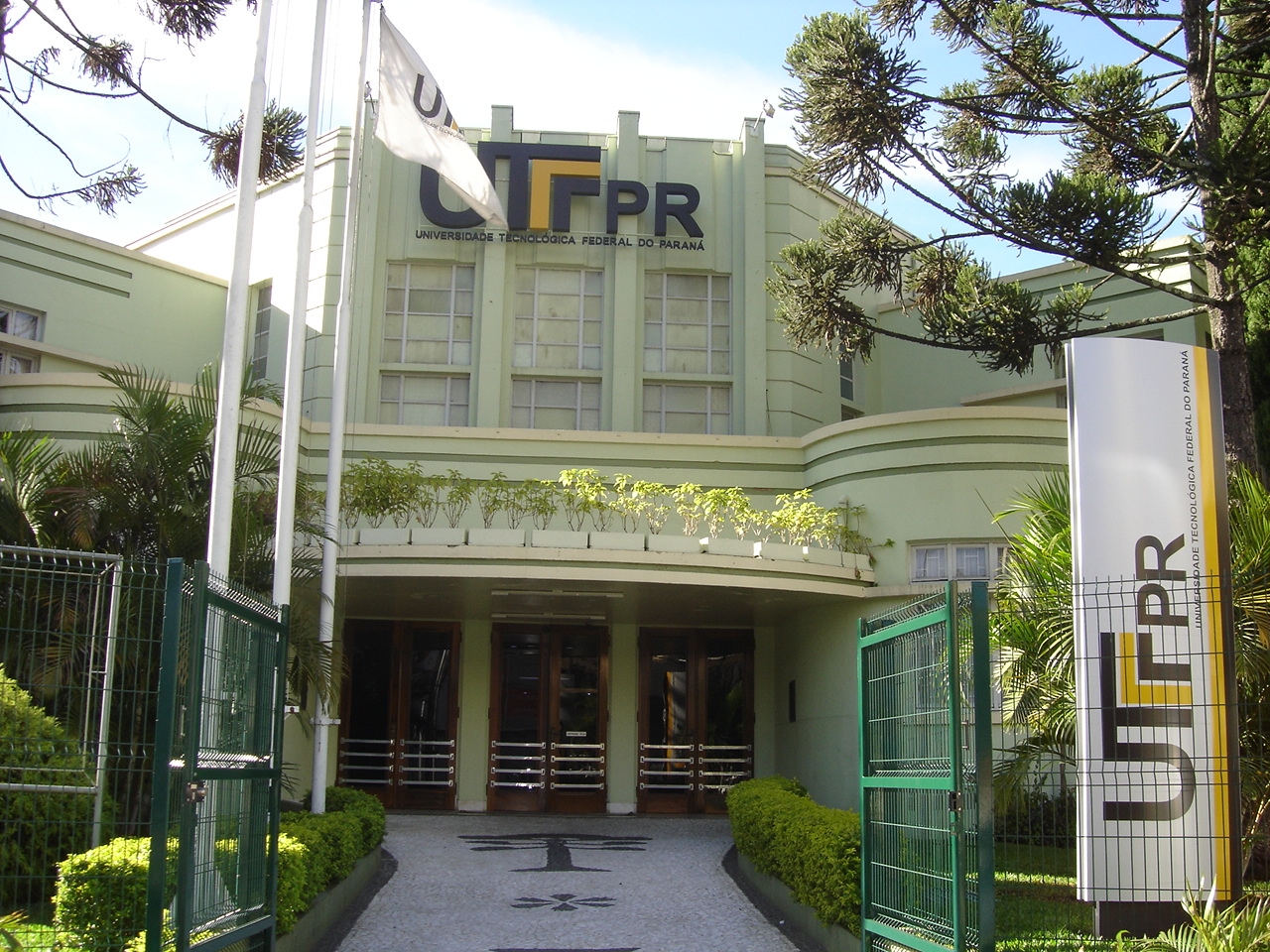
Avenida Sete de Setembro, 3165
Bairro Rebouças
Curitiba – Paraná (PR)
80230-901
(41) 3310-4639
Research & Teaching
The Academic Physics Department (DAFIS) of Technological Federal University (UTFPR) have special tradition on Teaching Physics Research, among other work areas. Teaching on Particle Physics was lately included as a new work subject.
Behind Teaching, DAFIS have research in other areas, namely: strange particles phenomenology, computational physics, cosmology and gravitation, ionizing radiation, nuclear physics, medical and odontological radiology and photonic devices and its aplications in biology, medicine and nanociencies. There are two Intergraduation offered by DAFIS: Physics Teaching and Technological Medical Radiology.
DAFIS, besides the laboratories related to the areas mencioned above, have the best computational cluster at the University.
O Departamento Acadêmico de Física (DAFIS) da Universidade Tecnológica Federal (UTFPR), dentre outras aŕeas, tem tradição em pesquisa em Ensino de Física. A Física de Partículas foi incluída recentemente entre os temas de pesquisa em Ensino.
O DAFIS também conta com pesquisadores envolvidos nos seguintes temas de investigação: Fenomenologia de Partículas com Estranheza, Física Computacional, Cosmologia e Gravitação, Radiações Ionizantes, Física Nuclear, Radiologia Médica e Odontológica e Dispositivos Fotônicos e suas Aplicações em Biologia, Medicina e Nanociências. São duas as graduações oferecidas no DAFIS: em Licenciatura em Física e em Tecnologia em Radiologia Médica.
Além dos laboratórios referentes às áreas mencionadas acima, o DAFIS conta com o maior cluster computacional da Universidade.
Outreach
http://www.sbfisica.org.br/fne/Vol6/Num1/charme.pdf
http://www.sbfisica.org.br/v1/escolacern
Links & Downloads
http://www.utfpr.edu.br/curitiba
Lavras: Universidade Federal de Lavras
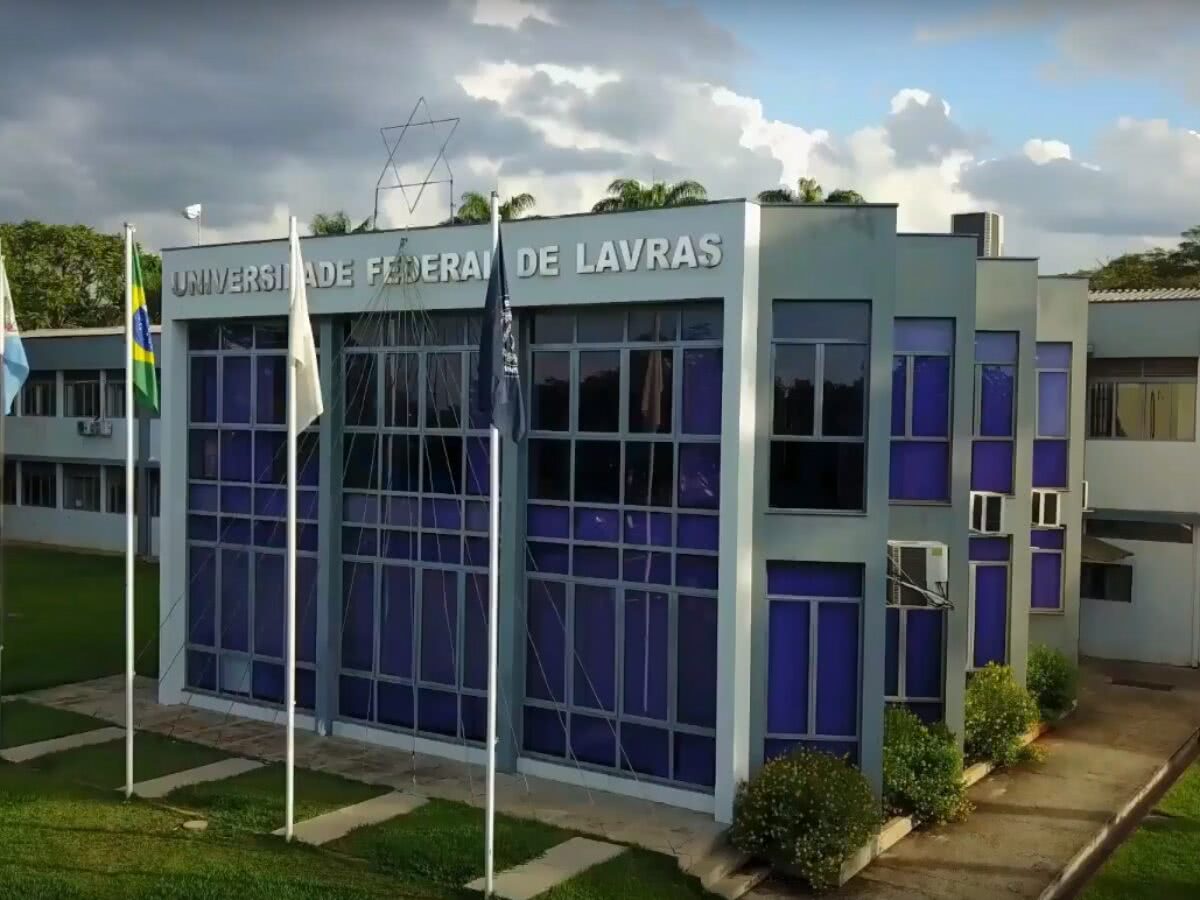
Câmpus Universitário
Caixa Postal: 3037
CEP: 37200-000
Lavras – Minas Gerais (MG)
Brazil
+55 (35) 3829-1122
Research & Teaching
Founded in 1908 as Agricultural School of Lavras, in 1938 it was named School of Agriculture of Lavras; it was federalized in 1963 and in 1994 it became Universidade Federal de Lavras – UFLA (Federal University of Lavras). Since then it is committed to provide and foster development and continuous expansion of services to society.
The Physics Departament was founded in 2014 and it currently has 25 full professors. Research includes differents areas of theoretical, experimental and computational physics and, in particular, research in theoretical aspects of particle physics and quantum field theory.
Links & Downloads
Natal: Universidade Federal do Rio Grande do Norte
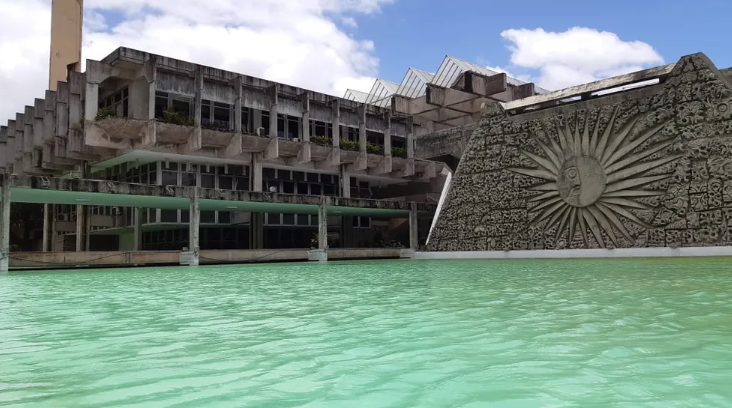
Universidade Federal do Rio Grande do Norte – Campus Universitário Central
Campus Universitário Lagoa Nova
CEP 59078-900 | Natal/RN – Brasil
Escola de Ciências e Tecnologia (ECT)
(84) 3342 2381
(84) 3342 2303
Research & Teaching
The Federal University of Rio Grande do Norte (UFRN) through the Department of Theoretical and Experimental Physics (DFTE), School of Science and Technology (CS & T) and International Physical Institute (IIP) has contributed to the development of research in various areas of Physics. The School of Science and Technology has a large group of young researchers in High Theoretical Energy Physics with special interest in: supersymmetry and supergravity, string theory, physics nuclear relativistic, cosmology, topological aspects in field theory and teaching on particle physics. Some of Researchers group are associated to Graduate Program in Physics of UFRN, managed by Department of Theoretical and Experimental Physics (DFTE).
The IIP is a research institute with an international vocation, permanently facing the frontier areas of theoretical physics. Its mission is to intensify the exchange of scientific knowledge with the international community and, in particular with the Latin American community, being the unifying national strategic pole areas of theoretical physics.
Reserch Filds of IIP include:
- Quantum information;
- Quark hadron and nuclear physics, including many-body systems;
- String theory and holography
- Strong correlated electron systems
A Universidade Federal do Rio Grande do Norte (UFRN) atraves do Departamento de Física Teórica e Experimental (DFTE), Escola de Ciências e Tecnologia (ECT) e Instituto Internacional de Física (IIF) tem contribuído para o desenvolvimento de pesquisas em varias áreas da Física. A Escola de Ciências e Tecnologia tem um grupo de jovens investigadores em Física de Altas Energias Teórica com especial interesse em: supersimetria e supergravity, teoria da corda, física relativista nuclear, cosmologia, aspectos topológicos em teoria de campo e ensino em Física de Partículas. Alguns pesquisadores do grupo estão associados ao Programa de Pós-Graduação em Física da UFRN, gerido pelo Departamento de Física Teórica e Experimental (DFTE).
O IIP é um instituto de investigação com vocação internacional, apoiando pesquisas em áreas de fronteira da Física teórica. Sua missão é intensificar o intercâmbio de conhecimento científico com a comunidade internacional e, em particular com a comunidade latino-americana, sendo um pólo nacional de áreas estratégicas unificadoras da física teórica.
Os campos de pesquisa do Instituto Internacional de Física incluem:
- Informação quântica;
- Quark, hadron e física nuclear,incluindo sistemas de muitos corpos;
- Teoria das cordas e holografia
- Sistemas de elétrons fortemente correlacionados.
Outreach
Facebook: Visita Virtual ao Experimento ATLAS – CERN
Links & Downloads
School of Science and Tecnology
The Department of Theoretical and Experimental Physics (DFTE)
Rio de Janeiro: Rio de Janeiro State University – DFNAE/IFADT/UERJ
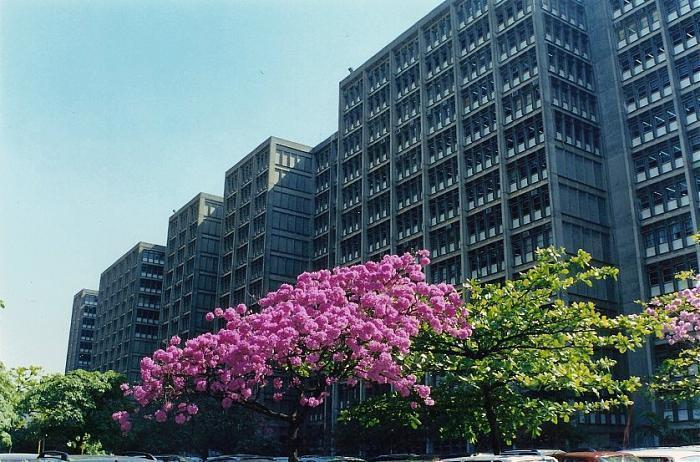
Department of Nuclear and High Energy Physics
State University of Rio de Janeiro
Rua São Francisco Xavier, 524
20550-900 Rio de Janeiro Brasil
+55 21 2334 0483
Research & Teaching
The Department of Nuclear and High Energy Physics performs basic research in fenomenology and experimental physics at high international level and offers basic and post-graduate university education in physics. The actual areas of specialization of the Department are nuclear and particle physics.
Os objetivos do Departmento de Fisica Nuclear e Altas Energias sao a pesquisa basica em fenomenologia e fisica experimental de altas energias em nivel internacional e oferecer educacao em nivel de graduacao e pos-graduacao em Fisica. Atualmente, as nossas areas de especializacoes sao a nuclear e a de particulas.
Outreach
Brazilian Physics Society (SBF)
Links & Downloads
Rio de Janeiro: Universidade Federal do Rio de Janeiro
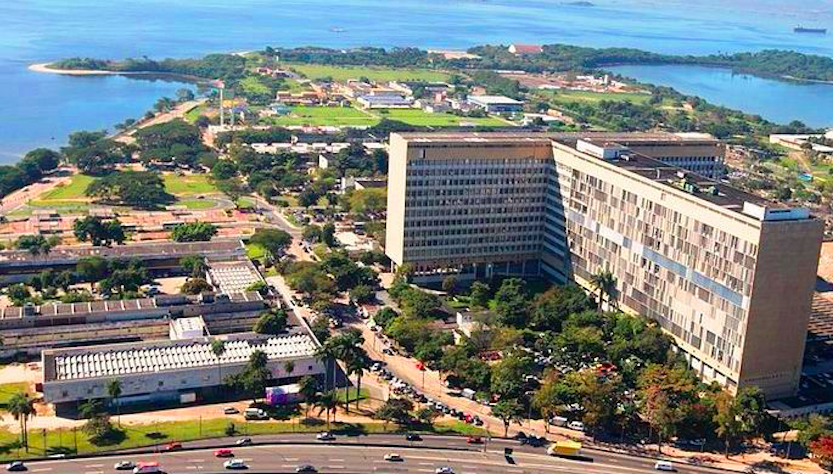
Instituto de Física
Universidade Federal do Rio de Janeiro
Av. Athos da Silveira Ramos, 149
Centro de Tecnologia – bloco A –
Cidade Universitária – Rio de Janeiro, RJ
CEP: 21941-972
Brasil
+55 21 3938 7107
Research & Teaching
The Institute of Physics at the Rio de Janeiro Federal University (UFRJ) offers undergraduate and graduate (master’s and PhD) programmes in physics. The research activities of the Institute are concentrated in several areas: particle physics, nuclear physics, astrophysics and cosmology, atomic and molecular physics, optics and quantum information, condensed matter physics, and physics education. The Teaching Lab at the Institute of Physics (LADIF) has a collection of videos and experiments available to students and teachers, and welcomes visits from primary and secondary schools.
The Particle Physics Lab (LAPE, Laboratório de Física de Partículas) was created in 1993 and since then has been participating in international high energy physics collaborations. Currently, the group has 13 researchers and about 10 graduate and 15 undergraduate students. Our group is a member of the LHCb collaboration at CERN, where we work on data analysis, detector development and experiment operations. The main goals of the LHCb experiment are the search for the asymmetry between matter and antimatter and the study of rare decays of particles containing bottom or charm quarks.
O Instituto de Física (IF) da Universidade Federal do Rio de Janeiro (UFRJ) oferece cursos de graduação e pós-graduação (mestrado e doutorado) em física. A pesquisa do Instituto se concentra em várias áreas: física de partículas, física nuclear, astrofísica e cosmologia, física atômica e molecular, ótica e informação quântica, física da matéria condensada e ensino de física. O Laboratório Didático do Instituto de Física (LADIF) conta com um acervo de vídeos e experimentos à disposição de alunos e professores, e recebe visitas de escolas da rede escolar de ensino médio e fundamental.
O LAPE (Laboratório de Física de Partículas) do IF-UFRJ foi criado em 1993 e desde então vem desenvolvendo trabalho de pesquisa na área de física de partículas participando de colaborações internacionais. O laboratório é composto atualmente por 13 professores pesquisadores, e normalmente conta com cerca de 10 alunos de pós-graduação e 15 de iniciação científica. O nosso grupo é membro da colaboração LHCb do CERN, onde trabalhamos na análise de dados, desenvolvimento de instrumentação e nas operações do experimento. Os principais objetivos do experimento LHCb são a busca pela assimetria entre matéria e antimatéria e o estudo de decaimentos raros das partículas que contêm os quarks bottom ou charm.
Outreach
Teaching Lab at IF-UFRJ (LADIF)
Links & Downloads
São Paulo: SPRACE – São Paulo Research and Analysis Centero
SPRACE
São Paulo Research and Analysis Center
Rua Dr. Bento Teobaldo Ferraz, 271
Bldg II – Ground Floor
01140-070 – Sao Paulo, SP
Brazil
+55 (11) 3393-7824
Research & Teaching
The SPRACE group comprises researchers from the São Paulo State University (UNESP), and the Federal University of ABC (UFABC).
Our main area of interest is High Energy Physics and we are involved in the Compact Muon Solenoid (CMS) Collaboration of the Large Hadron Collider at CERN, Switzerland.
We have a strong commitment to teaching and outreach activities. See for instance some of our lectures in the SPRACE Learning Center, and our outreach project A Chart in Every School. In 2010 an educational game with the elementary particles and their interactions was released. It is now available, free of charge for downloads or for on-line playing, at SPRACE Game.
O Centro Regional de Análise de São Paulo (SPRACE) envolve pesquisadores da Universidade Estadual Paulista (UNESP) e da Universidade Federal do ABC (UFABC).
Nossa principal área de interesse é a Física de Altas Energias e nós participamos de experimentos o Compact Muon Solenoid (CMS) no Large Hadron Collider do CERN, Suíça.
O SPRACE de grande importância és atividades de ensino e de divulgação científica. Veja por exemplo nossos cursos de Centro de Aprendizagem do SPRACE, e nosso projeto de divulgação “Um Cartaz em Cada Escola”. Em 2010 lançamos um jogo educativo com as partículas elementares e suas interações. Ele está disponível gratuitamente em SPRACE Game, para downloads ou para jogos on-line.
Outreach
The Particle Adventure (in Portuguese)
Elementary Structure of Matter: A Chart in Every School (in Portuguese)
Links & Downloads
São Paulo: Nuclear Physics Department – University of São Paulo
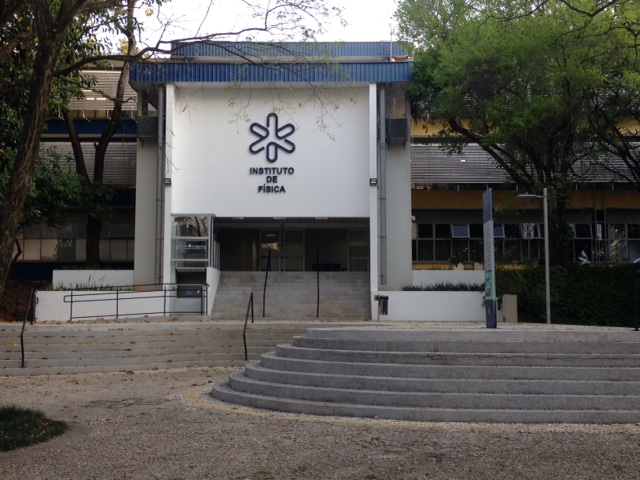
Rua do Matão, Travessa R
187 CEP 05508-090 Cidade Universitária
São Paulo
Brasil
+55(11)3091-6939
Research & Teaching
The Relativistic Heavy Ion Research Group is part of the Nuclear Physics Department at the University of São Paulo, Brazil. Our group studies relativistic collisions of heavy ions from the experimental point of view, in order to search and characterize the so called Quark-Gluon Plasma. The study of this state of matter can bring very important insights regarding quarks and gluons. It is also believed that such state of matter has existed in the very initial phase of our Universe, few micro-seconds after the Big-Bang. We are part of the STAR Collaboration at the Relativistic Heavy Ion Collider (RHIC) in Brookhaven National Laboratory (BNL), USA and the ALICE Collaboration at the Large Hadron Collider (LHC).
Our group is also involved in several outreach programs. We are organizing guided visits to the Open Laboratory of Nuclear Physics from the University of São Paulo. The goal is to open a research laboratory to middle-school students in order to bring them closer to science. Several studies on how to make these visits more effective are being conducted, constantly improving this program.
We also offer several courses on Nuclear and Particle Physics for School teachers in order to prepare them to teach such subjects to their pupils.
Outreach
Guided Visits Program of the Open Laboratory of Nuclear Physics
Outreach at the Physics Institute
University of São Paulo Outreach Office
Links & Downloads
Uberaba: Triângulo Mineiro Federal University – UFTM
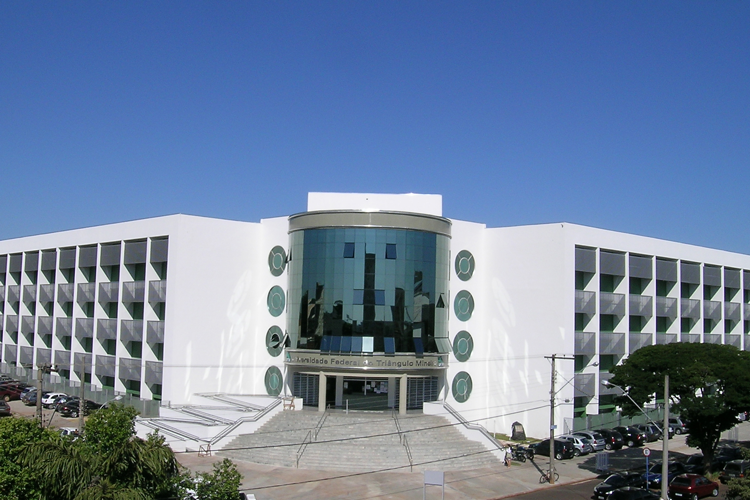
Instituto de Ciências Exatas, Naturais e Educação – UFTM
Av. Dr. Randolfo Borges, 1400 – Univerdecidade
CEP: 38.064-200 – Uberaba-MG
+55 34 3331 3000
+55 34 9689 0357
Research & Teaching
The physics department performs research in high energy physics related to the CP violation of B mesons, computational simulation in biophysics and theoretical research in physics education.
The department offers basic university education in physics, graduating professionals to work in the physics teaching at the public high schools.
Outreach
Links & Downloads
Porto Alegre: Instituto de Física UFRGS
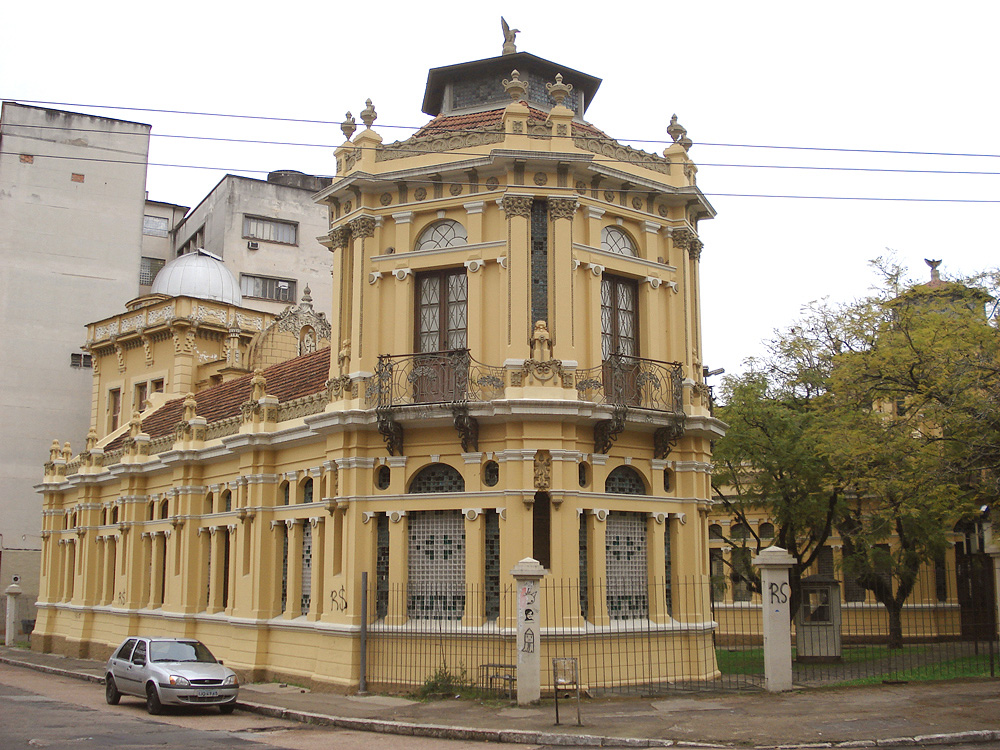
Av. Bento Gonçalves, 9500
Porto Alegre, RS
CE 91501-970
Brazil
+55-51-3308-7111
Research & Teaching
Porto Alegre was the home of the first colleges of state of Rio Grande do Sul, such as Pharmacology, Chemistry, and Engineering. In 1934 these colleges integrated the University of Porto Alegre, which became Unversity of Rio Grande do Sul in 1947. Founded in 1953, Centro de Pesquisas Físicas (Center of Physics Research) was the first department dedicated to Science research and became Instituto de Física in 1959. After more then 60 years, Instituto de Física has built a solid record in Physics Research on a variety list of topics, from experimental and theoretical physics to Astronomy. Over the course of its existence, Instituto de Física has published more than 6000 scientific papers and graduated more than 500 doctors and 600 master students. Nowadays, Instituto de Física counts with more than 100 Professors and 30+ researchers groups, including groups working in the ALICE and CMS Collaborations.
Outreach
For more than 20 years, Instituto de Física is organizing several outreach activities all over the state of Rio Grande do Sul. The community is participating in activitives for Science popularization and attending guided visits to the laboratories. Although a few acitivities are meant for high schoolers in order to prospect future students in Science, many inniciatives provide activities for children as adults as well. One of the older inniciatives, lectures in different parts of Porto Alegre have presented the local community to the diverse research topics under investigation at Instituto de Física.
Links & Downloads
National Responsible
Vitor Oguri, Marcia Begalli
Departamento de Fisica Nuclear e Altas Energias
Instituto de Fisica Armando Dias Tavares
Universidade do Estado do Rio de Janeiro
Rua Sao Francisco Xavier, 524, andar 3
20550-900 Rio de Janeiro
Brasil
+55 21 2334 0483
oguri@uerj.br, begalli@fnal.gov
Links