Belgium

Institutes
Antwerpen: University of Antwerpen – Onderzoeksgroep elementaire-deeltjesfysica
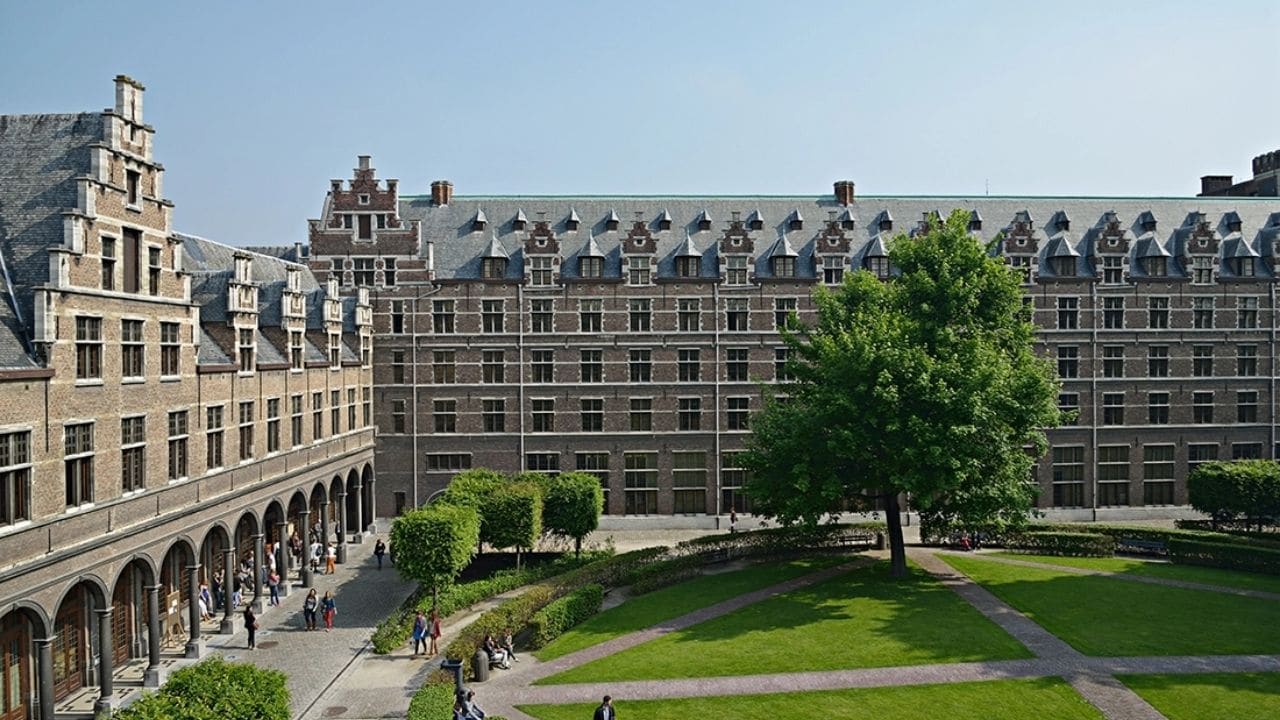
Particle Physics Group
Physics Department
Groenenborgerlaan 171
B-2020 Antwerp
Belgium
+32-3-265-3560
Research & Teaching
Physics education at the University of Antwerp is organised in a bachelor/master structure. The bachelor programme includes the necessary basic knowledge of physics and mathematics. The master programme is a training at an advanced level, followed by a specialisation in one of the following domains: elementary particle physics, solid state and nanophysics, bio- and medical physics, computational physics and theoretical physics. These specialisations reflect the research strengths of the Physics Department.
The Particle Physics Group at the University of Antwerp has a long and outstanding tradition in experimental and phenomenological research concerning particle collisions as conducted by the largest particle accelerator in the world, the Large Hadron Collider at CERN (Switzerland). Our research focuses on the study of quantumchromodynamics, the search for Higgs boson, the search for extra dimensions of space, the search for sterile neutrinos at the Belgian BR2 reactor and most recently the monitoring of gravity waves with the future Einstein Telescope.
De opleiding Fysica aan de Universiteit Antwerpen wordt georganiseerd in twee cycli. In de bachelor Fysica wordt de noodzakelijke grondige kennis van fysica en wiskunde meegegeven. Een deel van het programma mag de student vervangen door een minor in een andere discipline. Momenteel worden twee minoren expliciet aangeboden: Wiskunde en Biochemie.
Het curriculum van de masteropleiding omvat een basisvorming op hoger niveau, gevolgd door een verdieping in één van de belangrijke deelgebieden van de fysica. Het Departement Fysica biedt drie specialisatierichtingen aan: vaste-stof- en materiaalfysica, bio- en medische fysica en elementaire-deeltjesfysica. Deze specialisaties leunen aan bij het onderzoek dat in het departement Fysica wordt uitgevoerd.
De Elementaire-deeltjesgroep van de Universiteit Antwerpen heeft een lange en uitstekende traditie in experimenteel en fenomologisch onderzoek betreffende deeltjesbotsingen bij o.a. de grootste deeltjesversneller ter wereld, de Large Hadron Collider te CERN (Zwitserland).
Ons onderzoek spitst zich toe op de studie van de kwantumchromodynamica (QCD), de zoektocht naar het Higgs-deeltje, de zoektocht naar extra dimensies van de ruimte, de zoektocht naar steriele neutrino’s in de Belgische BR2-reactor en meest recentelijk de detectie van zwaartekrachtgolven met de toekomstige Einstein Telescope.
Outreach
Masterclasses Particle Physics
Belgian Physical Society
Interactions.org
Particle Adventure
Experiments with science
Links & Downloads
University of Antwerp (UA)
Studying Physics at the UA
The Physics Departement of the UA
The Particle Physics research group of the UA
The CMS experiment
Deutsche Elektronensynchrotron (DESY)
European Organisation for Nuclear Research (CERN)
SoLid experiment
Gravitational waves research
Bruxelles: University of Bruxelles – Service de Physique des Particules Elémentaires
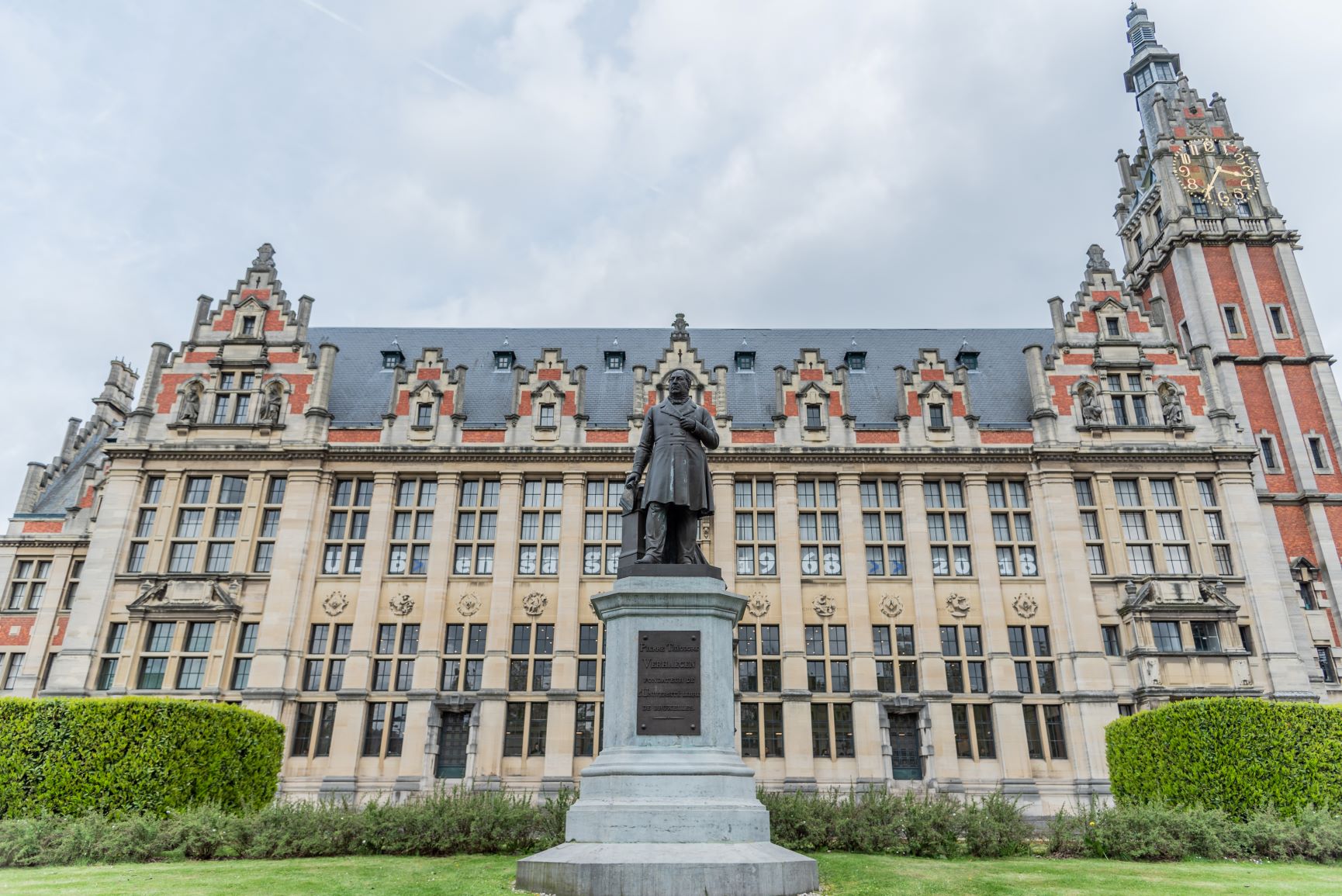
Service de Physique des Particules Elémentaires
Inter-University Institute for High Energies (IIHE-ULB)
Faculté des Sciences, CP230
ULB, Boulevard du Triomphe
B-1050 Bruxelles
Belgium
+32 (0) 2 629-3202
+32 (0) 2 629-3224
Research & Teaching
The main topic of research at the Inter-University Institute for High Energies – IIHE (ULB – VUB) is the study of elementary particles produced either at large accelerators, CERN (Switzerland) and DESY (Germany), or in cosmic rays (South Pole). The institute is presently involved in several large international experiments: AMANDA/ICECUBE, CHORUS, CMS, DELPHI, H1 and OPERA. The “Service de Physique des Particules Elémentaires” which is part of the IIHE, belongs to the Physics Department of the “Université Libre de Bruxelles“.
Le sujet principal des recherches à l’ Institut Interuniversitaire des Hautes Energies – IIHE (ULB – VUB) est l’étude des particules élémentaires produites aux grands accélérateurs du CERN (Suisse) et de DESY (Allemagne), ou dans le rayonnement cosmique (au Pôle Sud). L’Institut est impliqué dans plusieurs grandes expériences internationales: AMANDA/ICECUBE, CHORUS, CMS, DELPHI, H1 et OPERA. Le Service de Physique des Particules Elémentaires qui est une des composantes de l’IIHE, appartient au Département de Physique de l’ “Université Libre de Bruxelles“.
Outreach
Learning more on Particle PHYSICS:
The Particle Adventure
CERN – educational resources
Trip to the heart of matter (in French)
Lectures:
Introduction to CERN visit for teachers (in French: Part I and Part II
The world of neutrinos (in French)
Scientific activities for you:
L’expérimentarium de physique de l’ULB
Centre de culture scientifique de l’ULB
Jeunesses scientifiques de Belgique
Stages d’astronomie
and more:
Links & Downloads
Bruxelles: Vrije Universiteit Brussel
Pleinlaan, 2
1050 Brussels
Belgium
Research & Teaching
The Interuniversity Institute for High Energies, IIHE (ULB-VUB), was created in 1972 at the initiative of the academic authorities of both the Université Libre de Bruxelles and Vrije Universiteit Brussel. Its main topic of research is the physics of elementary particles.
The present research programme is based on the extensive use of the high energy particle accelerators and experimental facilities at CERN (Switzerland) and DESY (Germany) as well as on non-accelerator experiments at the South Pole.
The main goal of this experiments is the study of the strong, electromagnetic and weak interactions of the most elementary building blocks of matter. All these experiments are performed in the framework of large international collaborations and have led to important R&D activities and/or applications concerning particle detectors and computing and networking systems.
Gent: University of Gent – Department of Physics and Astronomy
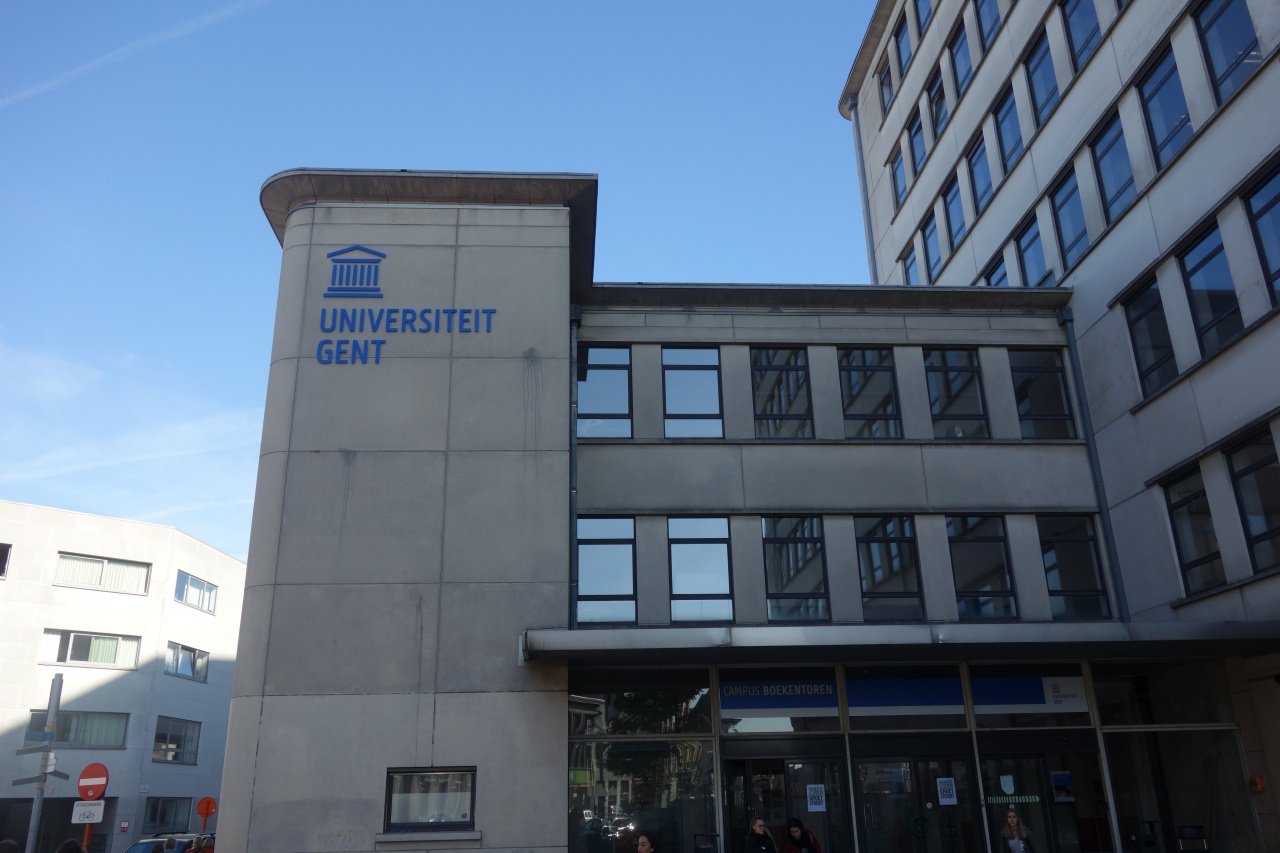
University of Gent
Department of Physics and Astronomys
Proeftuinstraat 86
B-9000 Gent
Belgium
+32 (9) 264-6543
Research & Teaching
The Department of Physics and Astronomy has research units in several fields, both experimental and theoretical. The theory groups cover subjects as nuclear many-body theory, hadronic structure physics and molecular modelling. The experimental groups are active in studies of particle physics, use of radiation in imaging techniques, use of nuclear methods in solid state physics (Moessbauer spectroscopy).
Other physics departments at the university of Gent are the Solid State Sciences, and the Department of Applied Physics.
De Vakgroep Subatomaire en Stralingsfysica heeft onderzoeksgroepen in verschillende domeinen, zowel experimentele and theoretische. De theoriegroepen werken op onderwerpen als nucleaire veel-deeltjes theorie, hadron structuur fysica en modelleren van molecules. De experimentele groepen zijn actief op het gebied van de deeltjesfysica, het gebruik van straling in beeldvorming en het gebruik van nucleaire technieken in vaste-stof fysica (Moessbauer spectroscopie).
Andere natuurkunde vakgroepen aan de Universiteit Gent zijn de Vakgroep Vaste-stof wetenschappen, Wiskundige Natuurkunde en Sterrenkunde, en Toegepaste Natuurkunde.
Outreach
Ghent Univeristy Museum: GUM is a museum dedicated to science, research and critical thinking.
Links & Downloads
Louvain-la-Neuve: University of Louvain – Institute of Nuclear Physics
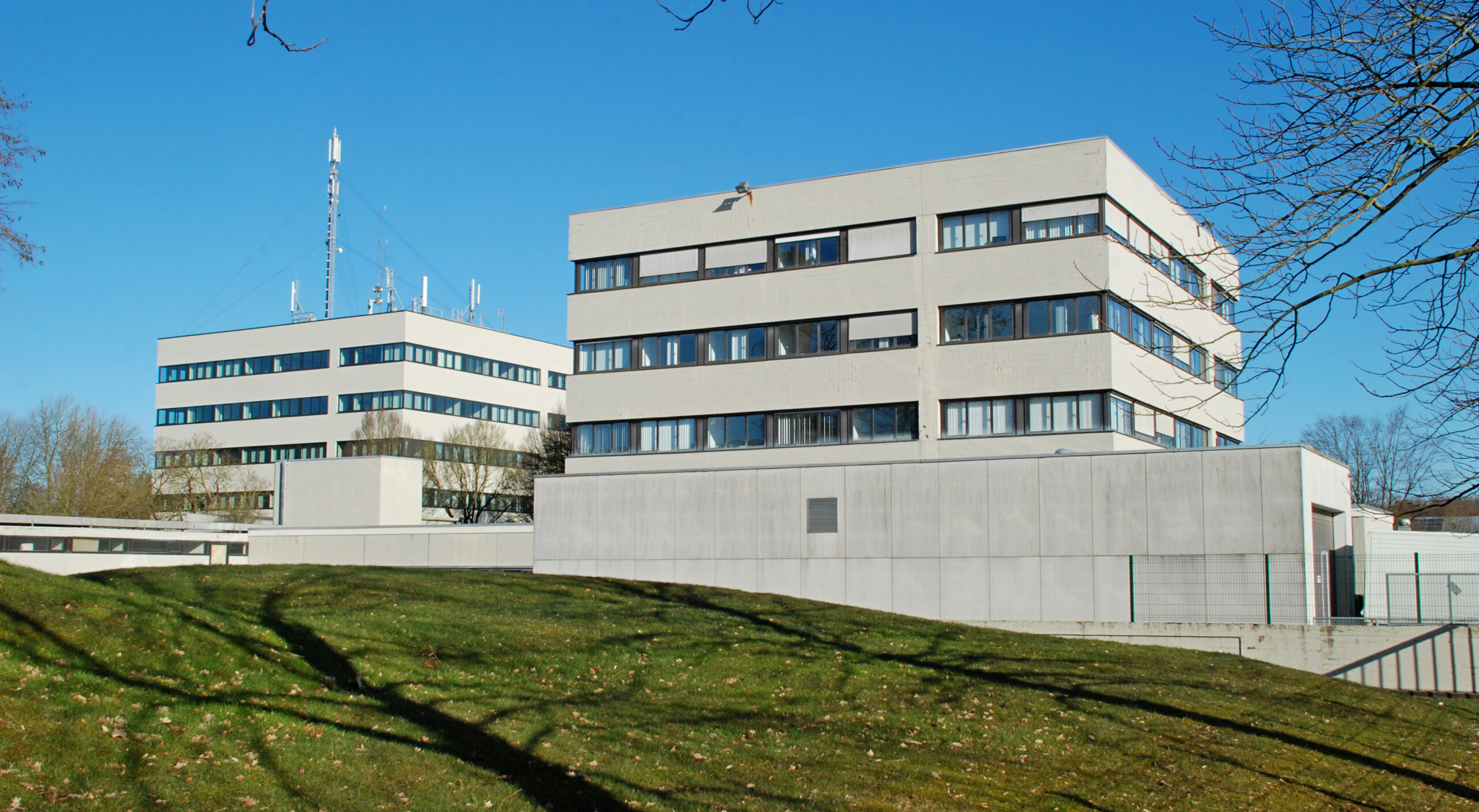
Institute of Nuclear Physics
Department of Physics
2, Chemin du Cyclotron
B-1348 Louvain-la-Neuve
Belgium
+32 (10) 473166
Research & Teaching
The Department of Physics at the Catholic University of Louvain (UCL) pursues research activities in high energy physics (both experimental and theoretical), in nuclear physics, in collective phenomena in condensed matter, in atomic physics and optics, and in climatology.
Through experimental collaborations with CERN and DESY, foremost within the CMS experiment at the LHC, as well as collaborations in theoretical physics with a variety of international research institutions, the high energy physics activities are mostly focused on the basic structures of matter and the fundamental interactions, on astroparticle physics, on cosmology, and on the fundamental quantum unification of all interactions and matter. Important instrumental and technical developments are thus realised within the Department of Physics, also towards other fields of applied physics, technology and medical physics.
The physics curriculum at the UCL is organised within the european framework of bachelor (3 years) and master’s (2 years) degrees within these different fields. Ph.D. research projects are pursued within either the Quantum Physics Graduate School, or the Geosciences Graduate School.
Le Département de Physique de l’Université catholique de Louvain (UCL) poursuit ses activités de recherche dans les domaines de la physique des hautes énergies(expérimentale et théorique), de la physique nucléaire, des phénomènes collectifs en matière condensée, de la physique atomique et de l’optique, et de la climatologie.
Au travers de collaborations expérimentales au CERN et DESY, principalement dans le cadre de l’expérience CMS au LHC, ainsi que de collaborations en physique théorique avec divers instituts de recherche internationaux, les activités des hautes énergies se focalisent principalement sur la structure élémentaire de la matière, les interactions fondamentales, l’astrophysique des particules, la cosmologie et l’unification fondamentale quantique de toutes les interactions et les particules. Des développements instrumentaux et techniques d’importance sont ainsi réalisés dans le Département de Physique, également pour d’autres domaines d’applications physiques, techniques et médicales.
Les études de physique à l’UCL sont organisées dans le cadre européen des baccalauréats (3 années) et maÎtrises (2 années) dans ces divers programmes de formation. Les travaux de recherche menant à des thèses de doctorat sont réalisés dans le cadre de l’Ecole Doctorale de Physique Quantique, ou de l’Ecole Doctorale en Geosciences.
Outreach
Links & Downloads
Catholic University of Louvain (UCL)
Research Institute in Mathematics and Physics
Center for Cosmology, Particle Physics and Phenomenology
Mons: University of Mons – Nuclear and subnuclear department – Particle Physics group
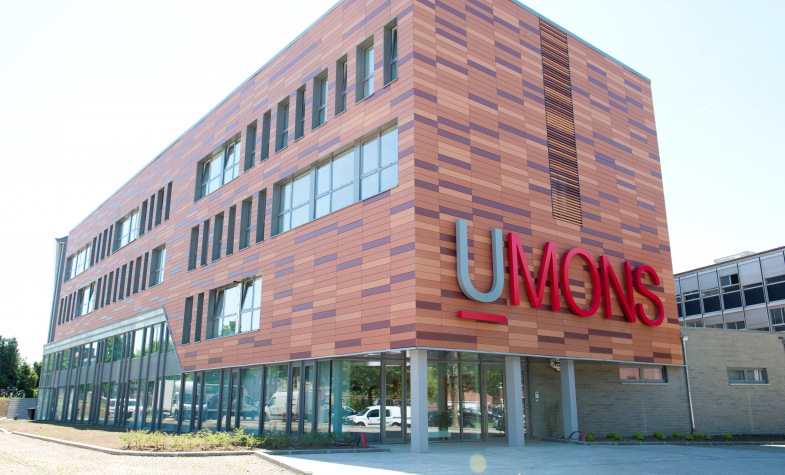
Université de Mons-Hainaut
Service de physique nucléaire et subnucléaire Groupe de physique des particules élémentaires
19 Avenue Maistriau
B-7000 Mons
Belgium
+32 65 373387
Research & Teaching
Research:
- pp interactions with the CMS detector at LHC/CERN
- High energy neutrino astrophysics (AMANDA/IceCube
- Detector research and development
- e+e- interactions with the DELPHI detector at LEP/CERN (until 2003)
Teaching:
- General Physics (1st and 2nd year)
- Quantum Mechanics
- Particle Physics
- Nuclear Physics
- Electronics
- Radiation interactions with matter
Recherche:
- Interactions proton-proton avec le détecteur CMS au LHC/CERN
- Astrophysique avec des neutrinos à haute énergie (AMANDA/IceCube)
- Recherche et dévelopement de détecteurs
- Interactions e+e- avec le détecteur DELPHI au LEP/CERN (jusque 2003)
Enseignement:
- Physique générale (2 premières années)=20
- Mécanique quantique
- Physique des particules
- Physique nucléaire
Outreach
Science Didactics Center
Outreach activities around Antarctica (AMANDA/IceCube) (in french)
High school teachers’ training in elementary particle physics
Science talks for high schools students
Links & Downloads
Particle Physics department homepage
National Responsible
Prof. Dirk Ryckbosch
Department of Physics and Astronomy
Proeftuinstraat 86
B-9000 Gent
Belgium
++32 (9) 264-6543
Links