
Category: Resources
-
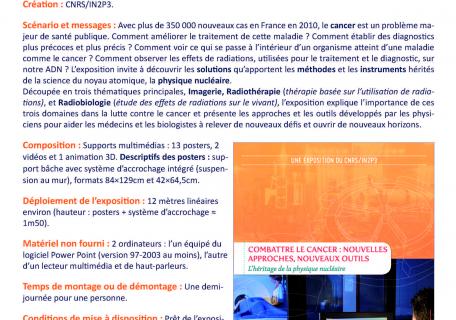
Combattre le cancer : nouvelles approches, nouveaux outils
Avec plus de 350 000 nouveaux cas en France en 2010*, le cancer est un problème majeur de santé publique. Comment améliorer le traitement de cette maladie ? Comment établir des diagnostics plus précoces et plus précis ? Comment voir ce qui se passe à l’intérieur d’un organisme atteint d’une maladie comme le cancer ?…
-
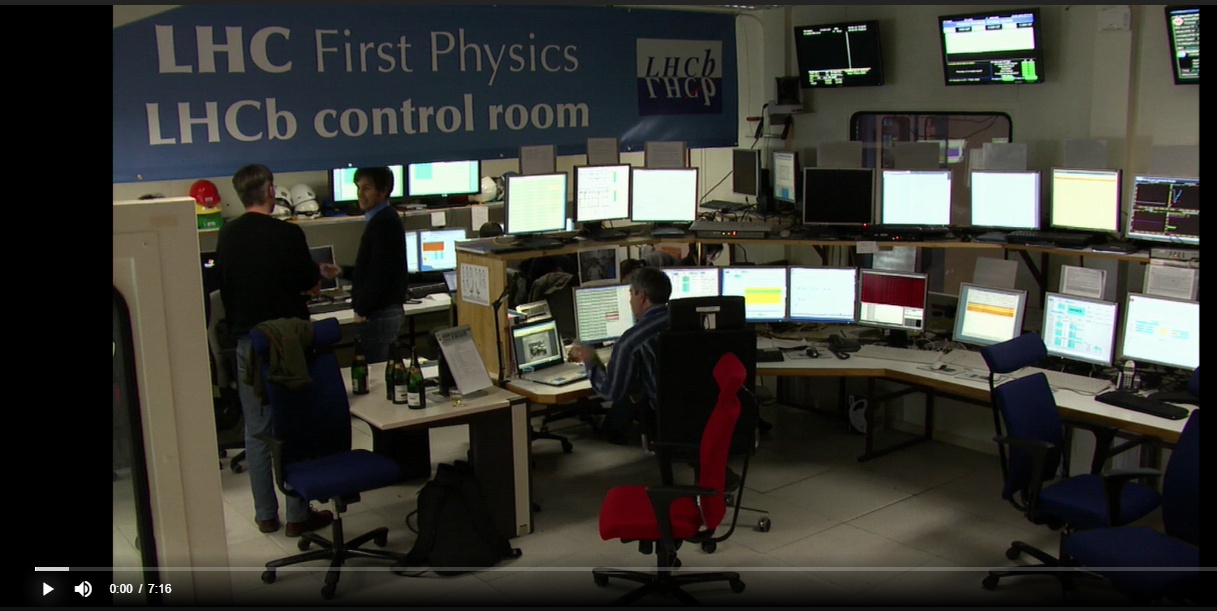
LHCb Interview – Interview with LHCb Physicist Tara Shears
CERN’s Paola Catapano interviews LHCb physicist Tara Shears on 30 March 2010 when the LHC reached particle collisions at 7teV. From the LHCb control center Shears describes the excitement on the day and answers questions about LHCb. Subjects covered in the interview include what LHCb is studying, how one of the biggest mysteries of the…
-
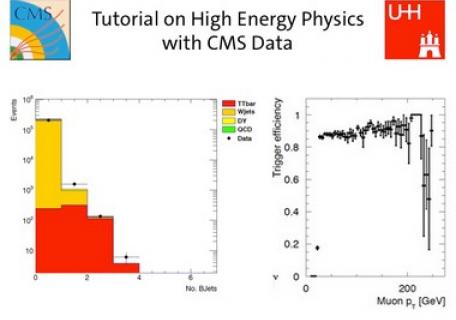
CMS HEP Tutorial
This tutorial gives a basic introduction into fundamental concepts of data analysis in HEP experiments. In the current format it has been used for a one-week course in the context of a HEP workshop and a data analysis school. It should be most useful for undergraduate students who have the basic knowledge of particle physics,…
-
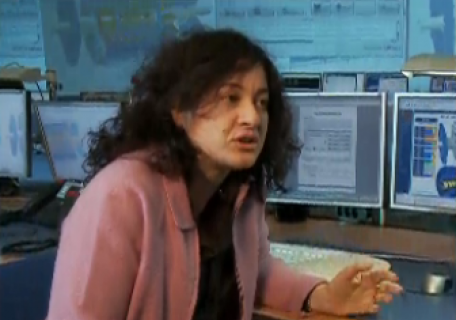
ATLAS Interview – Ana Henriques Correia, Tile Calorimeter System Project Leader, ATLAS Experiment on the LHC at CERN
An interview with Ana Henriques Correia, Tile Calorimeter System Project Leader, ATLAS Experiment at CERN by ATLAS colleague Steven Goldfarb (U of Michigan, U.S.A.). The ATLAS detector is built of many different components, each designed to measure properties of specific types of particles. Physicists need to know the type of particle, its direction and energy…
-
The fantastic voyage of Nino the neutrino, from the Sun to the Earth
Nino the neutrino travels from the Sun to the Earth with his friends (like a proton and a photon). But not everyone arrives to the INFN Lab’s of Gran Sasso in Italy. And someone even can’t stop there! This funny cartoon shows the properties of the neutrinos. It’s in Italian with English subtitles.
-
Scale of the Universe 2
A simple application that allows user to zoom out to the infinitely big, and zoom into the infinitely small, allowing the user to understand the scale of things in our universe. This tool is great for classrooms as well as for anyone who just wants to play and learn! For more info: Cary & Michael…
-
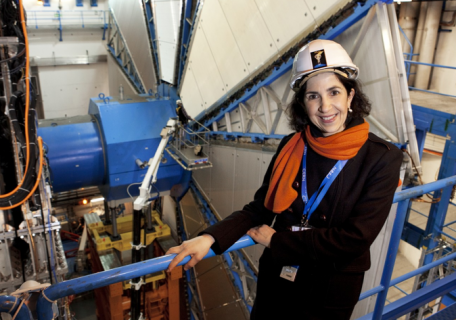
ATLAS Interview – Fabiola Gianotti, spokesperson of the ATLAS Experiment on the LHC at CERN
ATLAS physicist Steven Goldfarb interviews colleague Fabiola Gianotti, ATLAS spokesperson. In this interview, Gianotti describes in simple terms the complexity of ATLAS construction and what it is designed to do. Topics covered include the numbers in the ATLAS collaboration, detector dimensions, numbers of electronic channels and length of cables, the readiness of the experiment for…
-
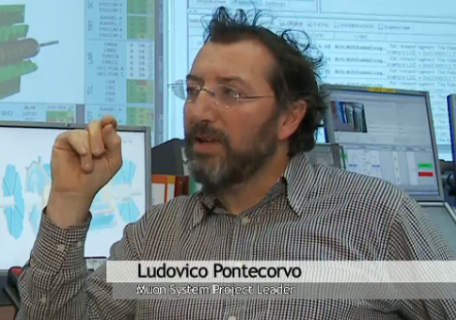
ATLAS Interview – Ludovico Pontecorvo, Muon System Project Leader, ATLAS Experiment on the LHC at CERN
The ATLAS detector is built with several layers designed to study different types of particles. At the outer-most layer lies the Muon spectrometer. ATLAS physicist Steven Goldfarb (U of Michigan, USA) interviews Ludovico Pontecorvo, ATLAS Muon System Project Leader to find out how the Muon Spectrometer measures these very small particles precisely. Topics covered include…
-
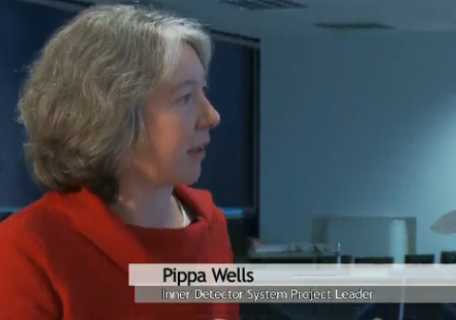
ATLAS Interview – Pippa Wells, Inner Detector System Project Leader, ATLAS Experiment on the LHC at CERN
In ATLAS, the very first component that is reached by colliding particles is the inner detector. As particles collide, their tracks, momentum and charge must be measured with the highest degree of precision. In this interview by ATLAS physicist Steven Goldfarb of colleague Pippa Wells, ATLAS Inner Detector System Project Leader, viewers learn how this…
-
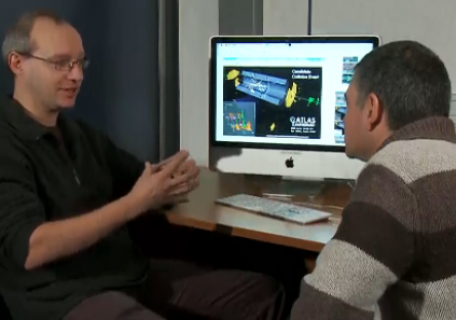
ATLAS Interview – Thorsten Wengler, Trigger Coordinator, ATLAS Experiment on the LHC at CERN
The ATLAS detector on the LHC will give us more and more data on particle collisions than has ever before been collected. How do ATLAS scientists select and keep the data that is important to them? In this interview by ATLAS’s Steven Goldfarb (U Michigan), Wengler describes in simple terms what the trigger system is…