Tag: ATLAS Collaboration
-
Armenia
Institutes National Responsible Anna Grigoryan A. Alikhanyan National Laboratory 2 Alikhanyan Brothers street,0036, Yerevan,Armenia +37 455 33 77 08 Anna Grigoryan
-
Argentina
Institutes National Responsible Hernan Wahlberg cc 67 – 1900 La Plata – Argentina54 (0)221 423 0122 Hernan Wahlberg
-
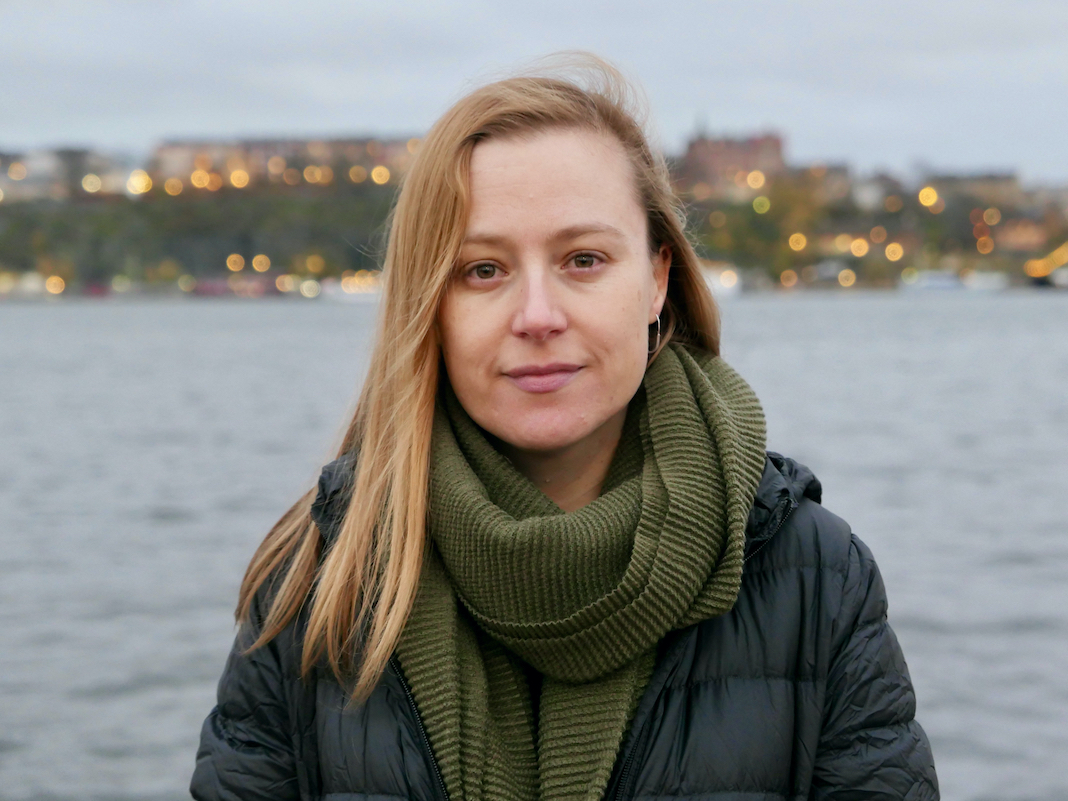
Rebeca Gonzalez Suarez
Rebeca Gonzalez Suarez is a Spanish-Swedish particle physicist that works at Uppsala University in Sweden where she teaches physics in the Departments of Physics and Astronomy and Engineering Sciences. A member of the ATLAS Collaboration at the Large Hadron Collider (LHC) since 2018, she started her career in the CMS Collaboration (2006-2018) looking for the…
-
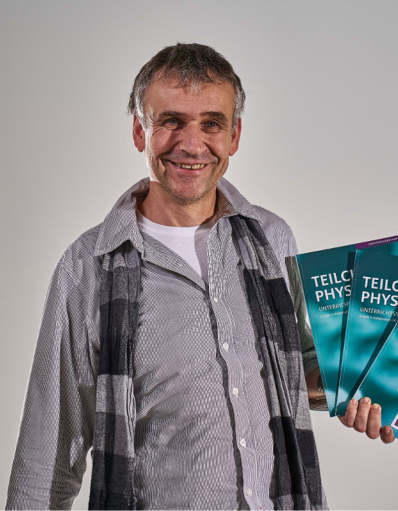
Michael Kobel
Former CHAIR 2009-2012 Following an associate professorship at the University of Bonn (1999–2006), Michael was appointed at the Dresden University of Technology as a full professor and head of the Institute for Particle Physics. He is also currently Dean of Study Affairs (Dept. of Physics. TU Dresden), responsible for new curricula development. Since 1984 he…
-
Norway
JOINED: 2016 CURRENT STATUS: MEMBER Representative Farid Ould-Saada At 13 Farid decided to become a physicist and opted for particle physics when he started university in Algeria. After his PhD from Saclay, France, he took part in several experiments (e+e-, ep, pN, ppbar, pp, nu-e) at DESY, CERN and the Bugey nuclear reactor. Farid lectures…
-

Greece
JOINED: 2016 CURRENT STATUS: MEMBER LOCAL RESOURCES WEBSITE:NTUA outreach webpage Greece has a long tradition in HEP since it has been one of the founding members of CERN. HEP research is carried out in Athens (both in the National and Kapodistrian as well as in the National Technical University), Aegean, Crete, Ioannina, Thessaloniki and in…
-
ATLAS Collaboration
JOINED: 2016 CURRENT STATUS: MEMBER LOCAL RESOURCES WEBSITE:ATLAS resources website ATLAS is a general-purpose particle-physics experiment at the Large Hadron Collider (LHC) at CERN. It is run by an international collaboration with about 5000 members from 180 institutions in 40 countries worldwide. It has been designed to exploit the full discovery potential and the huge…