Tag: Dark Matter
-
Georgia
Institutes National Responsible Ketevani Mirziashvili 77, Kostava Str., 0175,Administrative BuildingGeorgian Technical UniversityTbilisi, Georgia Reference Office +995 322 36 51 53 Ketevani Mirziashvili
-
France
Institutes Carte des laboratoires participant aux Masterclasses Internationales en France Brochure de présentation des Masterclasses en France (pdf) National Responsible Nicolas Arnaud
-
Australia
Institutes Adelaide: University of Adelaide Melbourne:ARC Centre of Excellence for Dark Matter Particle Physics Melbourne: University of Melbourne Sydney: University of Sydney National Responsible Jackie Bondell School of Physics, Faculty of Science, University of MelbourneParkville,VIC 3010, Australia 0411 845 521 Jackie Bondell
-

DUNE
JOINED: 2025 CURRENT STATUS: MEMBER The Deep Underground Neutrino Experiment (DUNE) is a leading-edge, international experiment for neutrino science. Discoveries over the past half-century have put neutrinos, the most abundant matter particles in the universe, in the spotlight for further research into several fundamental questions about the nature of matter and the evolution of the…
-
ALPHA Expirement
JOINED: 2025 CURRENT STATUS: MEMBER Representative Ina Carli
-
Australia
JOINED: 2016 CURRENT STATUS: MEMBER Australia has several active particle physics groups (University of Adelaide, University of Melbourne, Monash University, University of Queensland, University of New South Wales and University of Sydney). Members of these groups contribute to several experiments such as ATLAS, Belle/Belle II, COMET, Ice Cube, LHCb along with various direct dark matter…
-
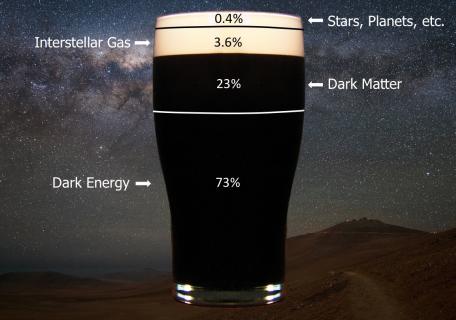
Solving the Enigma of the Universe: How we measure what we can’t see
This talk was given at TEDxOporto 2016 to a large, general public audience. It attempts to address the question, posed by a young student: “How do we measure what we can’t see?” The talk addresses this in three parts: What we currently know about our universe How we came about to understand this, through exploration…