Tag: Lower secondary level
-
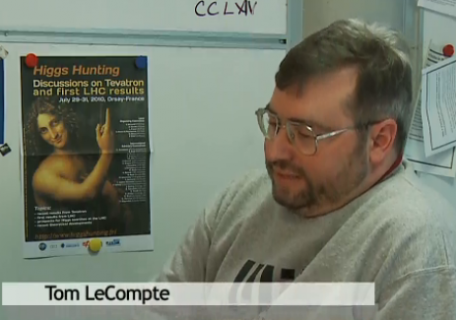
ATLAS Interview – Tom LeCompte, Physics Coordinator, ATLAS Experiment on the LHC at CERN
The ATLAS experiment will provide scientists with a lot of data which then must be analyzed and shared with the public. What does this process entail? In this interview by ATLAS physicist Steven Goldfarb (U of Michigan, USA), ATLAS Physics Coordinator Tom leCompte answers this important question. Topics covered in this interview include what a…
-
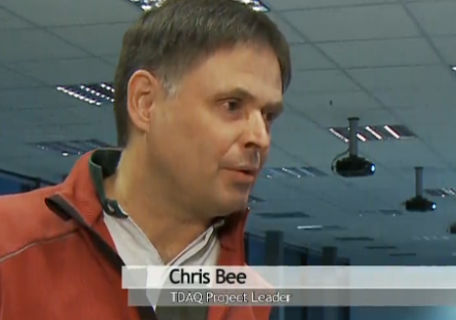
ATLAS Interview – Chris Bee, TDAQ Project Leader, ATLAS Experiment on the LHC at CERN
The ATLAS detector on the LHC will give us more and more data on particle collisions than has ever before been collected. Out of all of this data collected how do ATLAS scientists select the data that is really important to them? In this interview by ATLAS’s Steven Goldfarb (U Michigan), Chris Bee, TDAQ Project…
-
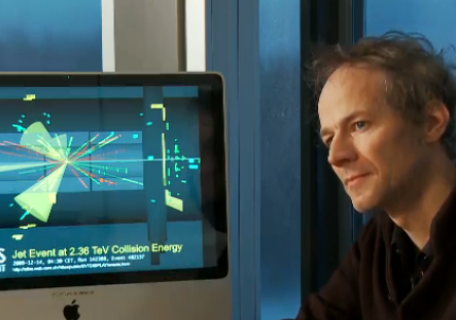
ATLAS Interview – Andreas Hoecker, Data Preparation Coordinator, ATLAS Experiment on the LHC at CERN
Andreas Hoecker, Data Preparation Coordinator at ATLAS, explains to colleague Steven Goldfarb (U Michigan) the role of his team in analyzing data collected by the ATLAS detector. Subjects covered include the data transfer process from the ATLAS detector to the ATLAS Data Quality Control Room, on and off-line analysis, the role of the quality control…
-
ATLAS Interview – Dario Barberis, Computing Coordinator – ATLAS Experiment on the LHC at CERN
This interview of Dario Barberis, Computing Coordinator for ATLAS on the LHC at CERN is conducted by ATLAS colleague Steven Goldfarb, (U of Michigan, USA). Subjects covered in this interview include: a. a brief description of how much data is collected, how much data is stored as a result (raw data, reconstructed data, copied data/archives),…
-
QuarkNet
Begun in 1998, this U.S.-based program provides opportunities for teachers to learn about and contribute to particle physics experiments and share what they learn with their students. This collaboration has yielded a variety of online instructional resources including raw datasets and derivative activities that provide opportunities for high school students to increase their understanding of…
-
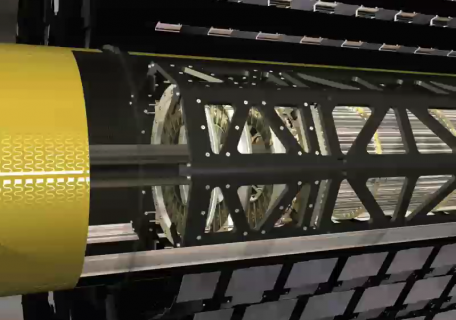
ATLAS Inner Detector (Pixel Detector and Silicon Tracker)
This colorful 3D animation is an excerpt from the film “ATLAS-Episode II, The Particles Strike Back.” Shot with a bug’s eye view of the inside of the detector. The viewer is taken on a tour of the inner workings of the detector, seeing critical pieces of the detector and hearing short explanations of how each…
-
Charge! Electricity and Magnetism
Particle physicists know how magnets big and small work and how they apply to our world. Students explore the relationship of magnetism and electricity and have questions answered about the power of these forces. This presentation is one of a series offered by Fermilab scientists, engineers and technicians at schools near the Lab. URL for…