Tag: Members
-

Belgium
JOINED: 2016 CURRENT STATUS: MEMBER Particle physics in Belgium takes place at the universities of Antwerp, Brussels (both Dutch- and French-language universities), Gent, Leuven, Louvain-la-Neuve and Mons, with activities in many experiments. The largest groups are in the CMS-experiment at the LHC and in IceCube, but there is also participation in NA62, JUNO and SoLid.…
-

Austria
JOINED: 2016 CURRENT STATUS: MEMBER Representative Natascha Hoermann Natascha started her education at a higher technical school for computer science and continued with physics at the Vienna University of Technology. Since 2007, she is working at the Institute of High Energy Physics (HEPHY) in Vienna. Her research field is physics analysis at the CMS experiment…
-
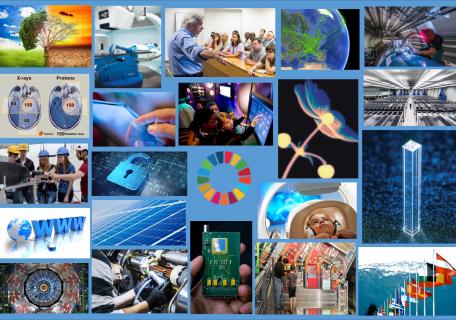
Impact of science on society and sustainable development showcased by particle physics and CERN
This presentation provides an overview of the broad positive impact of science on society and sustainable development, using CERN as a main example. As scientific community faces threatened funding of large experimental endeavors and low interest of young generation to engage in studies of physics and related sciences (refered to as “STEM (science, technology, engineering…
-
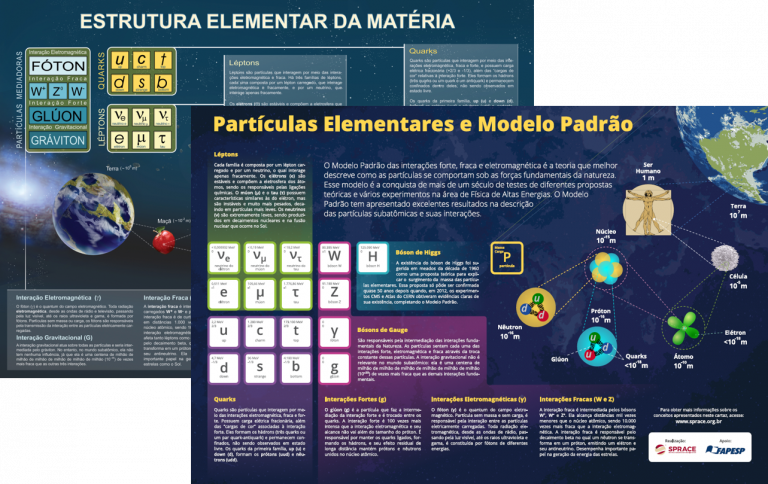
UM CARTAZ EM CADA ESCOLA
SPRACE distributed to all secondary schools in Brazil a poster presenting concepts about the intimate structure of matter and summarising the current scientific knowledge in this area
-
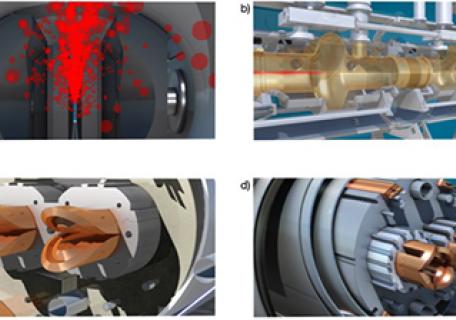
Introducing the LHC in the classroom: an overview of education resources available
In the context of the recent re-start of CERN’s Large Hadron Collider (LHC) and the challenge presented by unidentified falling objects (UFOs), we seek to facilitate the introduction of high energy physics in the classroom. Therefore, this paper provides an overview of the LHC and its operation, highlighting existing education resources, and linking principal components…
-
ATLAS Collaboration
JOINED: 2016 CURRENT STATUS: MEMBER LOCAL RESOURCES WEBSITE:ATLAS resources website ATLAS is a general-purpose particle-physics experiment at the Large Hadron Collider (LHC) at CERN. It is run by an international collaboration with about 5000 members from 180 institutions in 40 countries worldwide. It has been designed to exploit the full discovery potential and the huge…
-

Australia
JOINED: 2016 CURRENT STATUS: MEMBER Australia has several active particle physics groups (University of Adelaide, University of Melbourne, Monash University, University of Queensland, University of New South Wales and University of Sydney). Members of these groups contribute to several experiments such as ATLAS, Belle/Belle II, COMET, Ice Cube, LHCb along with various direct dark matter…
-
ALICE Collaboration
JOINED: 2016 CURRENT STATUS: MEMBER LOCAL RESOURCES WEBSITE:ALICE resources website ALICE is a heavy-ion experiment, designed to study the collisions of nuclei at the ultra-relativistic energies provided by the LHC. The aim is to study the physics of strongly interacting matter at the highest energy densities reached so far in the laboratory. In such conditions,…
-
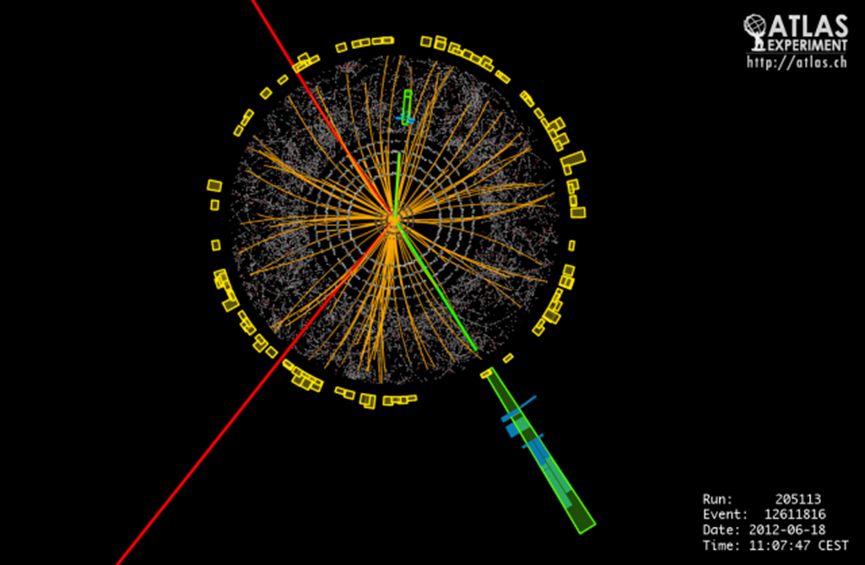
Discover the Z and Higgs bosons
Introduces students to CERN, LHC and ATLAS; instructions on how to use the HYPATIA event display to analyze data from ATLAS, specifically Z and Higgs boson decays.
-
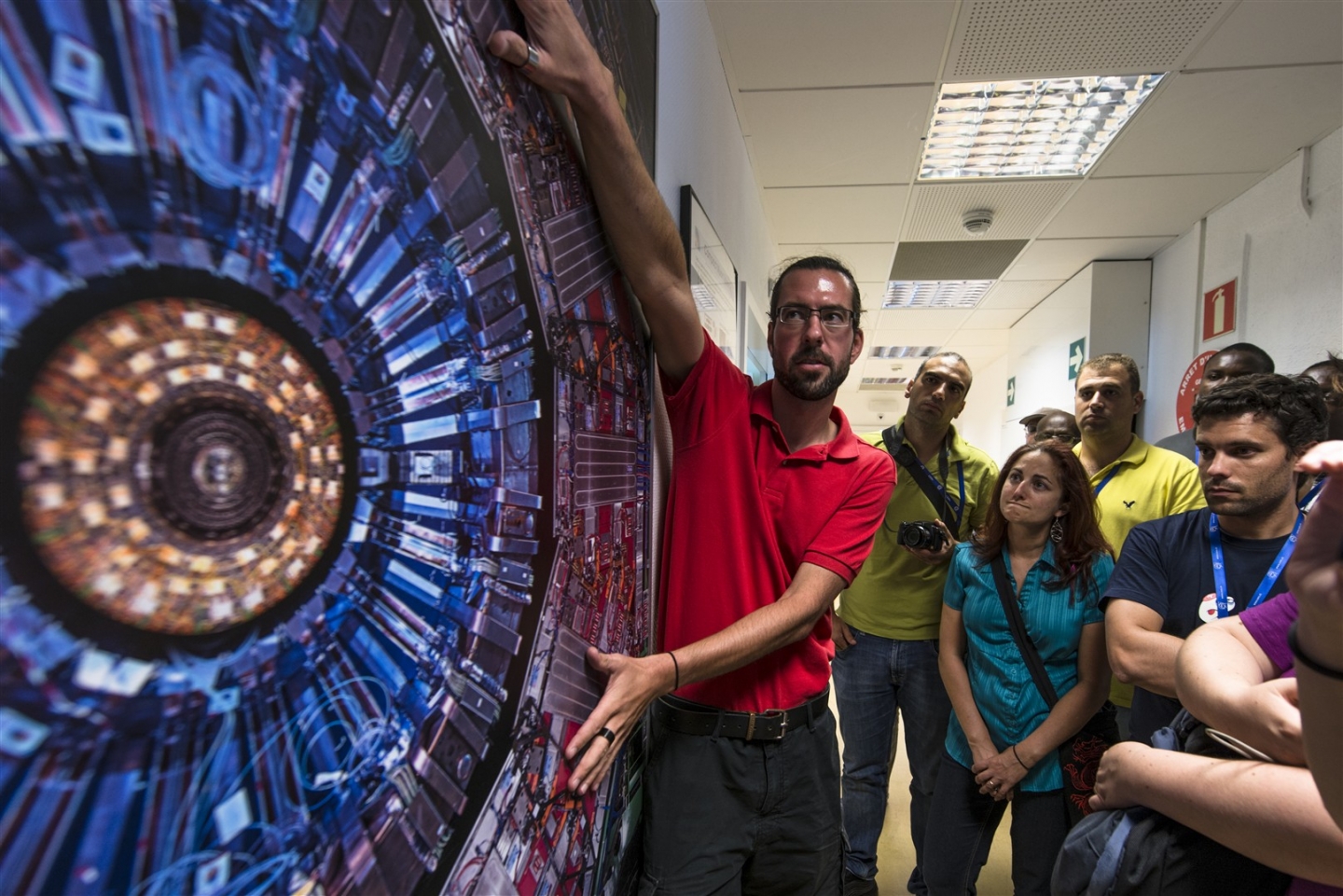
International HST programme – lectures
A WEB portal to the CERN’s international teacher programmes. Simple instructions How-to apply for the programme are provided in the FAQ section.