Tag: Technologies and Experiments
-

Ireland
JOINED: 2016 CURRENT STATUS: MEMBER In Ireland, promoting curiosity, creativity and critical thinking through fundamental physics is an important part of our scientific and educational mission. The Irish particle physics and cosmology community is actively engaged in introducing students, teachers and the wider public to the wonders of the Universe – from the smallest building…
-

Greece
JOINED: 2016 CURRENT STATUS: MEMBER LOCAL RESOURCES WEBSITE:NTUA outreach webpage Greece has a long tradition in HEP since it has been one of the founding members of CERN. HEP research is carried out in Athens (both in the National and Kapodistrian as well as in the National Technical University), Aegean, Crete, Ioannina, Thessaloniki and in…
-

Austria
JOINED: 2016 CURRENT STATUS: MEMBER Representative Natascha Hoermann Natascha started her education at a higher technical school for computer science and continued with physics at the Vienna University of Technology. Since 2007, she is working at the Institute of High Energy Physics (HEPHY) in Vienna. Her research field is physics analysis at the CMS experiment…
-
Introducing the LHC in the classroom: an overview of education resources available
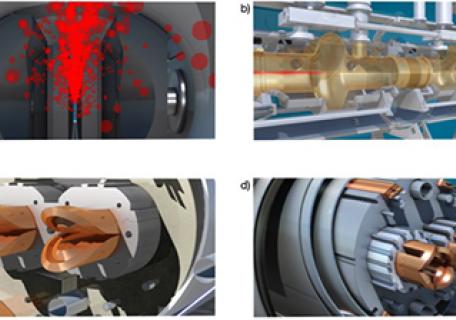
In the context of the recent re-start of CERN’s Large Hadron Collider (LHC) and the challenge presented by unidentified falling objects (UFOs), we seek to facilitate the introduction of high energy physics in the classroom. Therefore, this paper provides an overview of the LHC and its operation, highlighting existing education resources, and linking principal components…
-
CMS e-Lab
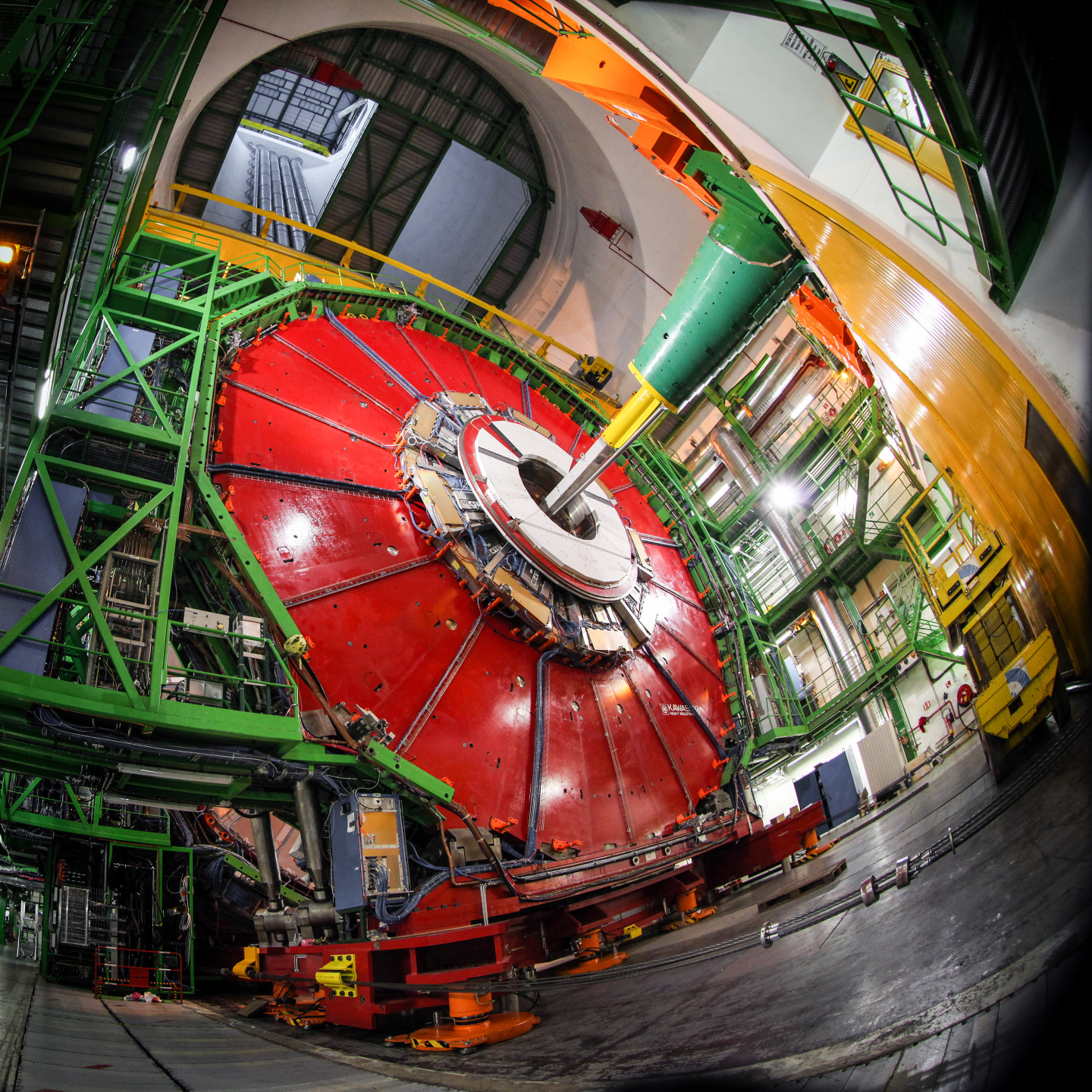
General information about the CMS, event analysis and even a motivational game for students. Various activities for student understanding.
-
Open Education at JINR
Educational portal of the Joint Institute for Nuclear Research. Virtual portal to lectures, seminars and practical exercises
-
Mean Lifetime Part 3: MINERvA
Through the analysis of neutrino events provided by MINERvA, the validity of the mathematical expressions of exponential decay can be checked. Activities for comprehension learners
-
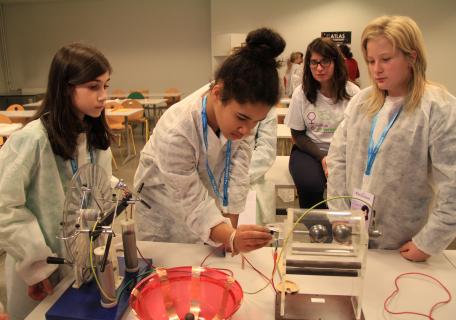
Salad Bowl Accelerator
Information This was one of the CERN workshops at the Expanding your Horizons event in Geneva (www.expandingyourhorizons.org/conferences/geneva/). Similar initiative than the one presented here: http://www.instructables.com/community/Build-your-own-particle-accelerator-demo/ Materials Needed (per bowl): Generator: we used a Wimshurst machine, hand operated, produces a direct current A salad bowl, non metallic Electrically Conductive Adhesive Transfer Tape (two sizes) Wires (banana/alligator)…
-
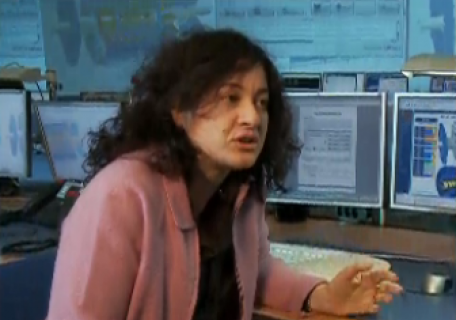
ATLAS Interview – Ana Henriques Correia, Tile Calorimeter System Project Leader, ATLAS Experiment on the LHC at CERN
An interview with Ana Henriques Correia, Tile Calorimeter System Project Leader, ATLAS Experiment at CERN by ATLAS colleague Steven Goldfarb (U of Michigan, U.S.A.). The ATLAS detector is built of many different components, each designed to measure properties of specific types of particles. Physicists need to know the type of particle, its direction and energy…
-
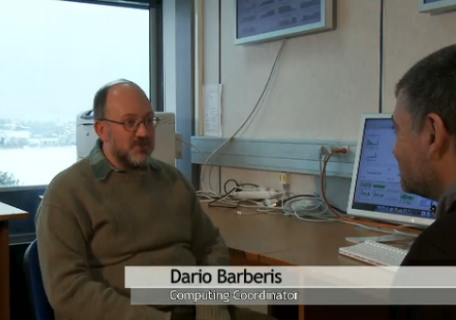
ATLAS Interview – Dario Barberis, Computing Coordinator – ATLAS Experiment on the LHC at CERN
This interview of Dario Barberis, Computing Coordinator for ATLAS on the LHC at CERN is conducted by ATLAS colleague Steven Goldfarb, (U of Michigan, USA). Subjects covered in this interview include: a. a brief description of how much data is collected, how much data is stored as a result (raw data, reconstructed data, copied data/archives),…