Tag: Upper secondary school level
-
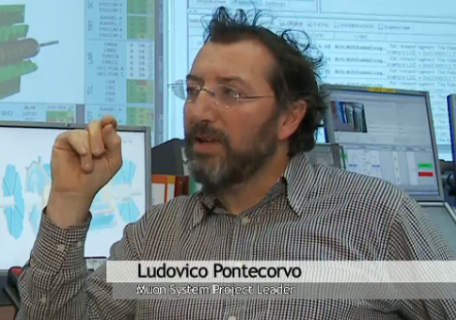
ATLAS Interview – Ludovico Pontecorvo, Muon System Project Leader, ATLAS Experiment on the LHC at CERN
The ATLAS detector is built with several layers designed to study different types of particles. At the outer-most layer lies the Muon spectrometer. ATLAS physicist Steven Goldfarb (U of Michigan, USA) interviews Ludovico Pontecorvo, ATLAS Muon System Project Leader to find out how the Muon Spectrometer measures these very small particles precisely. Topics covered include…
-
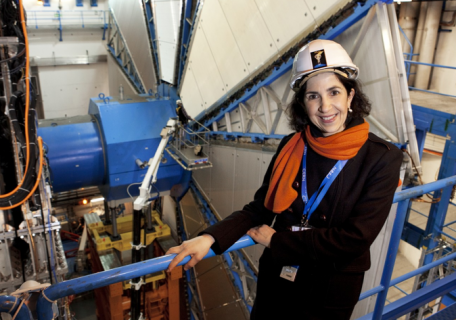
ATLAS Interview – Fabiola Gianotti, spokesperson of the ATLAS Experiment on the LHC at CERN
ATLAS physicist Steven Goldfarb interviews colleague Fabiola Gianotti, ATLAS spokesperson. In this interview, Gianotti describes in simple terms the complexity of ATLAS construction and what it is designed to do. Topics covered include the numbers in the ATLAS collaboration, detector dimensions, numbers of electronic channels and length of cables, the readiness of the experiment for…
-
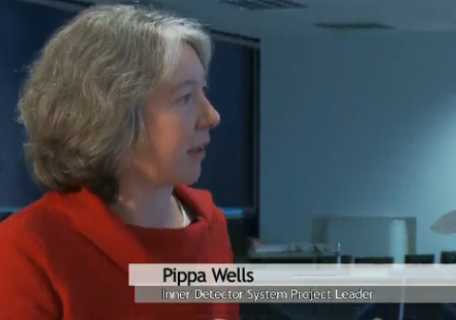
ATLAS Interview – Pippa Wells, Inner Detector System Project Leader, ATLAS Experiment on the LHC at CERN
In ATLAS, the very first component that is reached by colliding particles is the inner detector. As particles collide, their tracks, momentum and charge must be measured with the highest degree of precision. In this interview by ATLAS physicist Steven Goldfarb of colleague Pippa Wells, ATLAS Inner Detector System Project Leader, viewers learn how this…
-
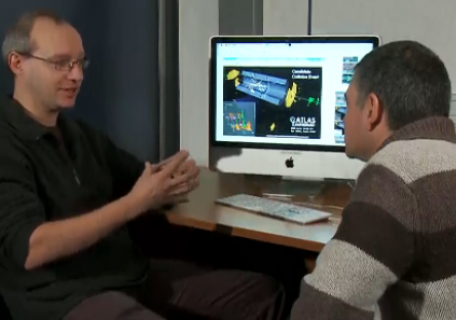
ATLAS Interview – Thorsten Wengler, Trigger Coordinator, ATLAS Experiment on the LHC at CERN
The ATLAS detector on the LHC will give us more and more data on particle collisions than has ever before been collected. How do ATLAS scientists select and keep the data that is important to them? In this interview by ATLAS’s Steven Goldfarb (U Michigan), Wengler describes in simple terms what the trigger system is…
-
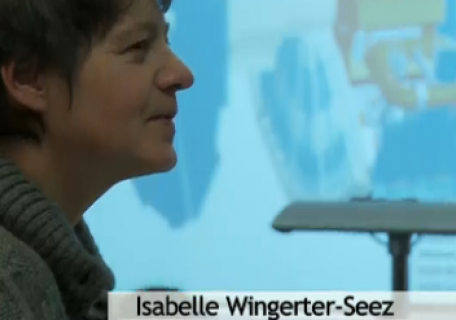
ATLAS Interview – Isabelle Wingerter-Seez, Liquid Argon Calorimeter (LAr) System Project Leader, ATLAS Experiment on the LHC at CERN
ATLAS is one of the largest and most complex science instruments ever built, designed to measure and identify particles coming from particle collisions. One of the most important measurements it makes is that of the energy of the particles. Stephen Goldfarb, ATLAS physicist (U of Michigan, USA) interviews ATLAS colleague Isabelle Wingerter-Seez, the Liquid Argon…
-
Particle Masses, what if they would have been different? / Teilchenmassen – Was wäre wenn sie anders wären?
This video tells you, why particle masses are central for our daily life, and why especially their values are crucial. This is the real reason why all of us should be curious where mass comes from. Making of:: The organizers of the German exhibition die Welt Maschine (2008), the German Executive LHC Outreach Group (GELOG),…
-
What is Antimatter? – video
Fermilab scientist Don Lincoln describes antimatter and its properties. He also explains why antimatter, though a reality, doesn’t pose any current threat to our existence!
-
International Masterclasses Explanatory video
10 min video explaining the history, the purpose and the day of the masterclasses. Interviews with: – the current and past moderators from CERN – the students from France, Austria and the USA – interviews with a french teacher – interview with the creator of the CMS exercise – interviews of the co-contributor to the…
-
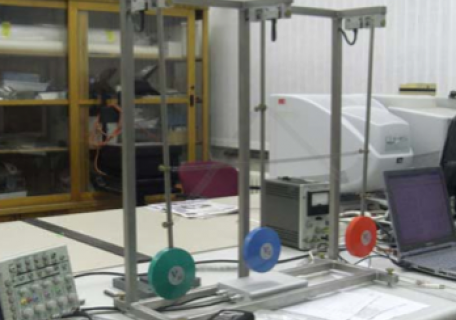
Exhibit Neutrino Pendulum
This is the worldwide first model of coupled pendula, which demonstrates the complete phenomenology of neutrino flavor-oscillations for 3 different neutrino species (flavors). Up until now, only models for just 2 flavors existed. The model is adjustable corresponding to variable neutrino mass differences and variable mixing parameters (PMNS angles) between the 3 flavors. Arbitrary oscillation…
-
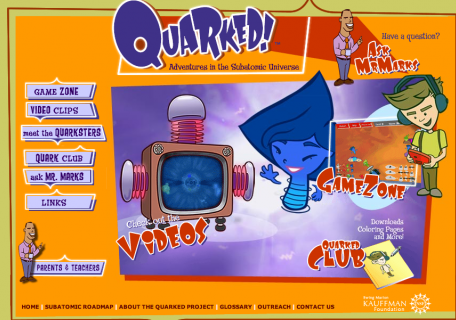
Quarked!
The Quarked! project was conceived by Professor Alice Bean and a diverse team of collaborators at the University of Kansas in 2003 as an entertaining method of introducing the world of subatomic physics to kids and adults. (…) Now, Quarked! – Adventures in the Subatomic Universe brings subatomic physics to life through a multimedia project…