by IPPOG Communication
Outreacher of the Month: Marco Circella
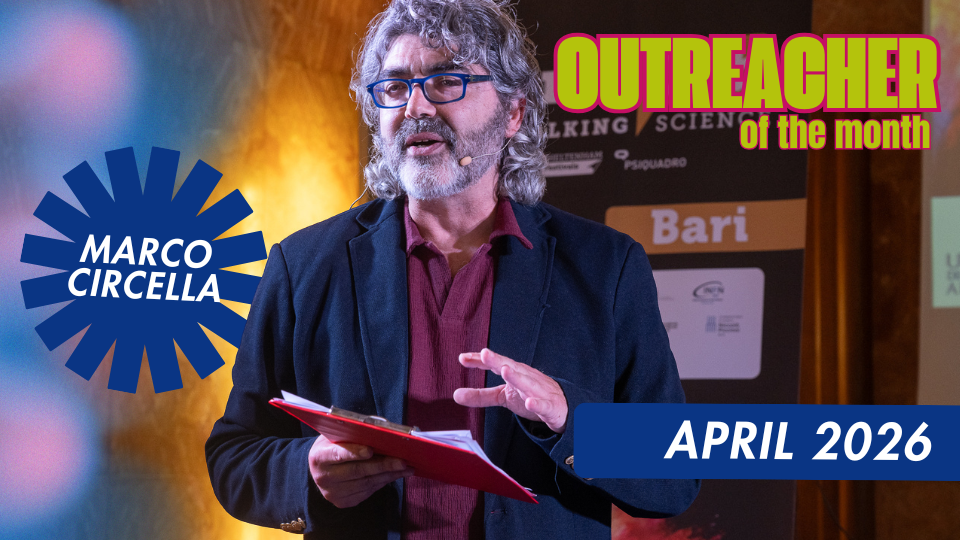
This month, we are pleased to introduce Marco Circella as our Outreacher of the Month. Based in Bari (Italy), Marco’s work in astroparticle physics has taken him across very different environments, from high-altitude experiments to deep-sea neutrino detectors in the Mediterranean. His research reflects a broad and curious approach to science, where the entire Universe becomes a space for exploration.
Alongside his research, Marco is deeply involved in outreach activities, playing a key role both within KM3NeT and at his institute, and contributing to large-scale public engagement initiatives.
1. Can you briefly introduce yourself and tell us about your outreach activities? (Short background/context)
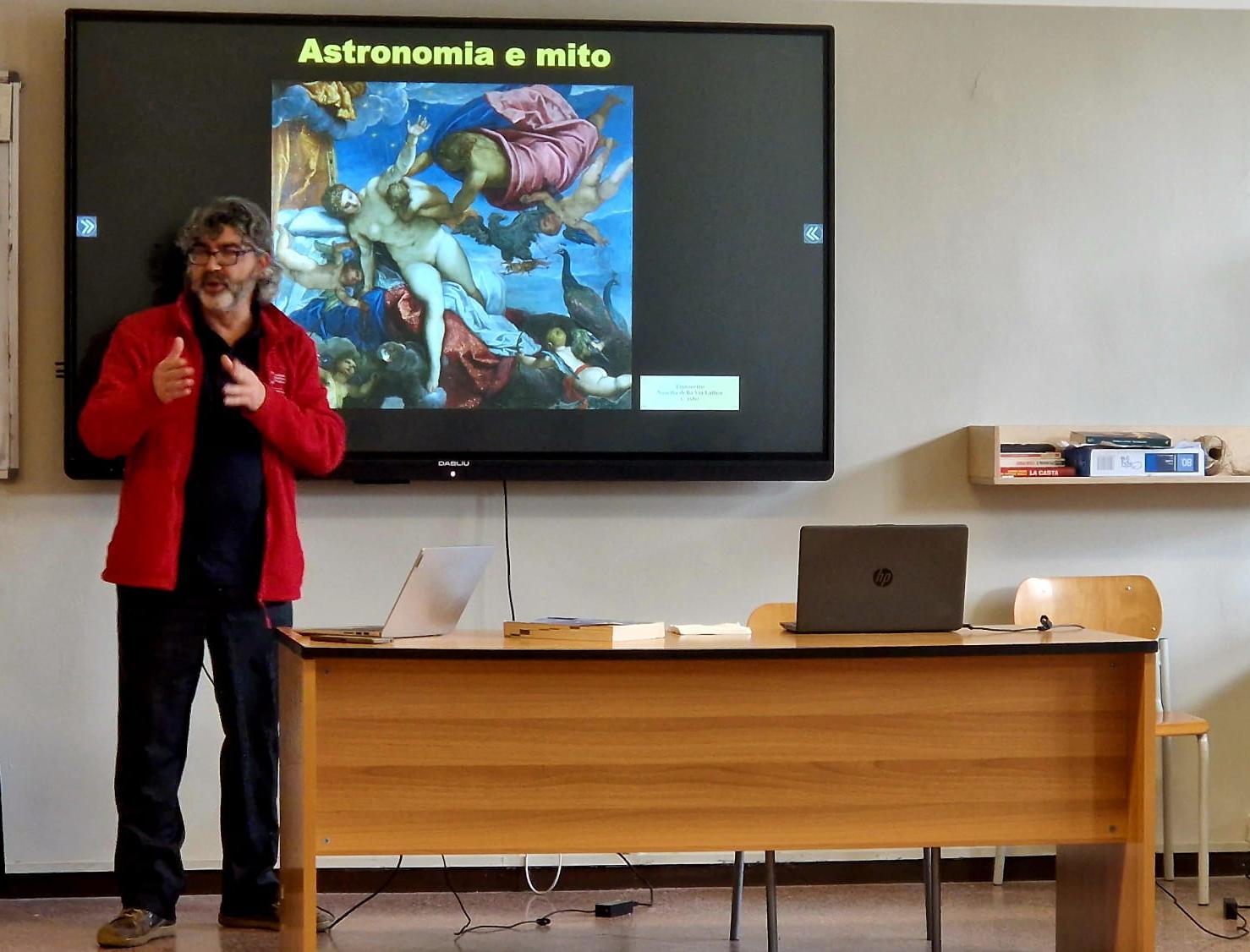
I am an astroparticle researcher, working at Istituto Nazionale di Fisica Nucleare in Bari, Italy. My activity has focused on experiments conducted in high atmosphere with balloon-borne detectors in a first phase, and lately I am doing research on neutrinos with giant detectors (ANTARES, KM3NeT) installed in the abysses of the Mediterranean Sea. One could say that I don't like to keep my feet on the ground, which is also true. But more importantly I follow a Galilean approach - do you remember when the great scientist wrote "La filosofia è scritta in questo grandissimo libro che continuamente ci sta aperto innanzi a gli occhi (io dico l'universo)? (*) For me the whole Earth and the cosmos are a great laboratory where to conduct science.
(*) Science is written in this great book which is open before our eyes, the Universe
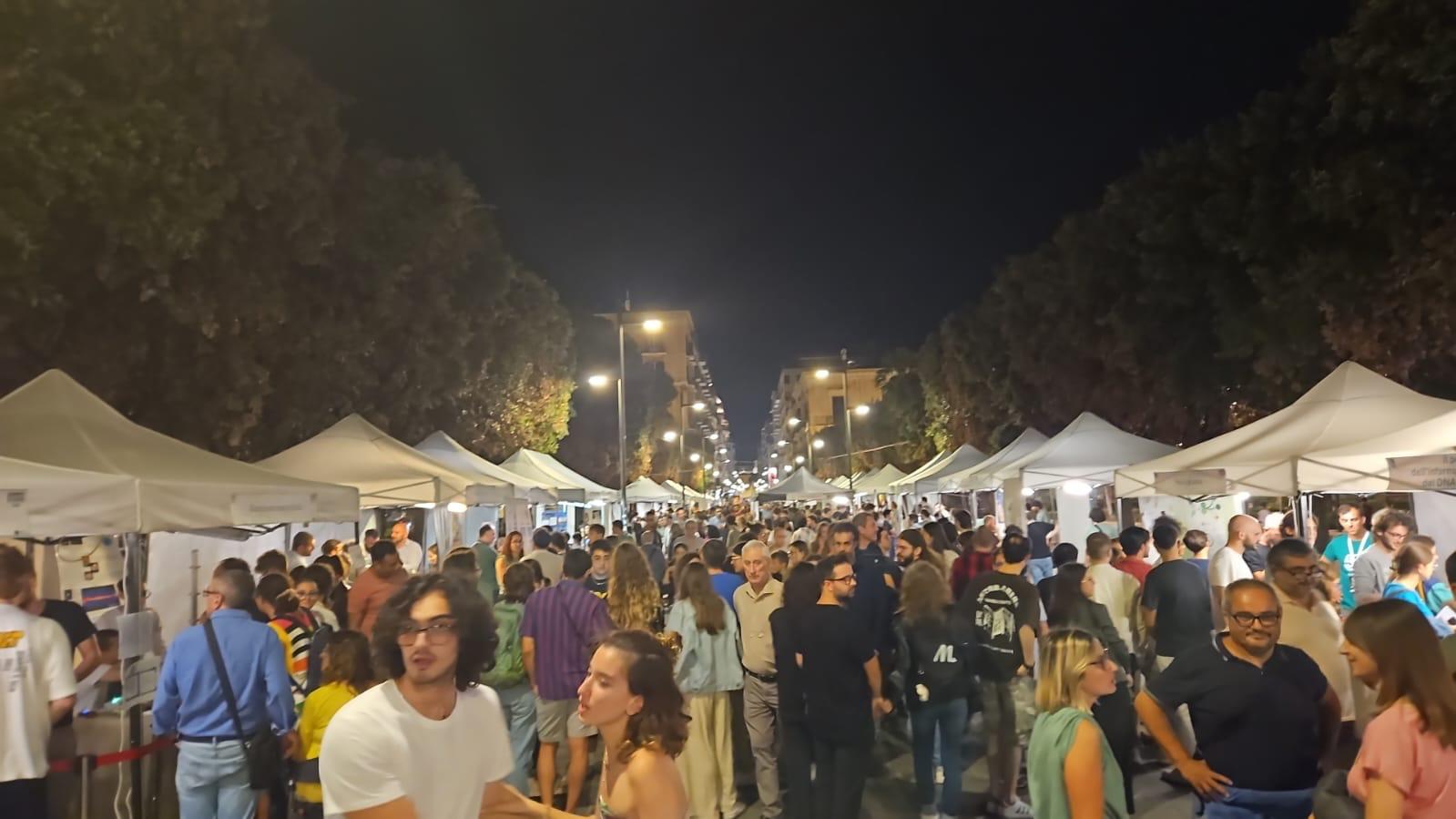
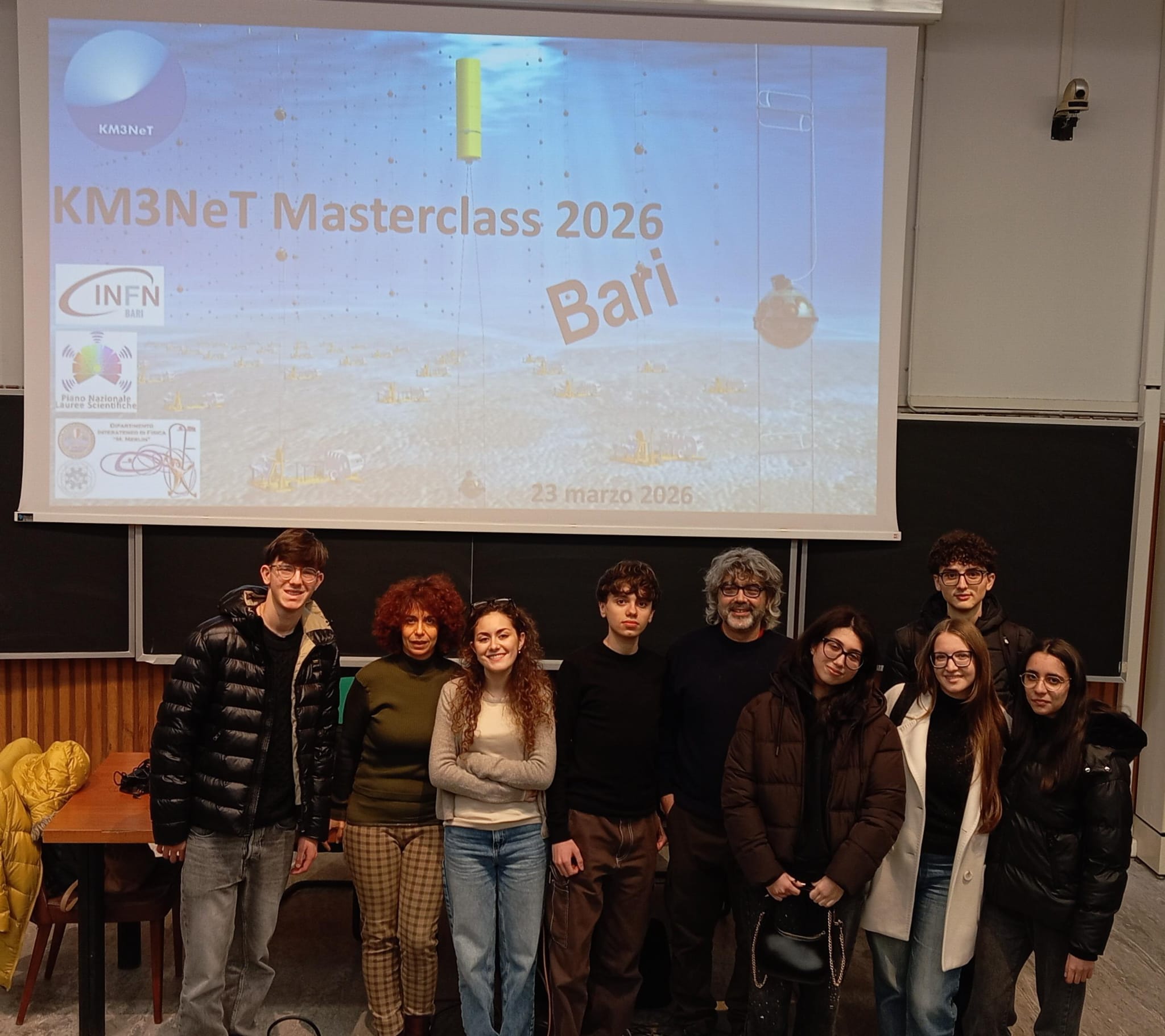
What I do for outreach: I chair the Outreach Committee of KM3NeT and I have a reference role for outreach at my institute. Consequently, I am involved in a variety of activities at all levels. My greatest effort lately was in the organization of the local events for the European Researchers' Night, the traditional rendezvous of the research community with the greater public, which ritually takes place on the last Friday of September each year throughout Europe. I have contributed to enlarge this event year after year in my city, so that the latest editions have become a sort of a big fun fair of science, including more than one hundred activities organized by a dozen institutions. It is my ambition that this event will evolve into a big festival of science, an event that the community well deserves. I also represent KM3NeT inside IPPOG: my latest achievement in this context was to organize the first masterclass of our experiment which took place recently.
2. What or who inspired you to become involved in science outreach?
It did not take me long to realize than within the projects in which I was working we had plenty of opportunities to tell interesting stories to our communities, ranging from the world of elementary particles to the greatest mysteries in the universe, and the detection techniques, and the way to install and operate detectors in such remote environments, and the Earth and sea science research, environment protection, etc. We can really find the right topic for intriguing any possible audience. Then I started to tell these stories at any possible occasion, at schools, during the visits to our facilities, at public events, ... The next step was to realize that telling stories is not enough: we need to engage the audience into full experiences, as a direct participation in an activity will make the experience unforgettable. It is for this reason that, when possible, we invite people to try their skills with data analysis, or even try to build or operate part of our detectors.
3. Which aspects of outreach do you enjoy the most, and why?
As long as you find an interested audience, everything is fine for me. Fortunately this is most often the case: there is a growing interest around to understand more of science. And since I like challenges, my preferred activities are those done in public events, where you can not really predict what the typical audience will be, as you will have to deal with all categories of visitors: families, students, highly-educated people along with science-skepticals, etc. And then you need to find the right tune to communicate with them all!
4. Outreach often comes with challenges. Can you share a personal anecdote from your outreach experience (if you have)?
There are a few recurrent questions that I receive while speaking of my experiments in remote places, chasing elusive particles...
These are: what is all this for? And: are there any practical objectives of your research? Sometimes someone even dares to ask (after hearing that neutrinos do not contribute to build atoms or molecules, i.e. the stuff with which we and our whole Earth are made): then, what are neutrinos meant for? Answering such questions is indeed challenging, because they question the fundamental motivations for doing science. An appropriate answer could be similar to the one that the great Michael Faraday reportedly said to the Chancellor of the Exchequer who was visiting his laboratory 150 years ago: the Chancellor, fascinated by all the instrumentation he saw and the explanations he got, asked if there were practical applications of the electrical studies that Faraday was doing, and the scientist, according to the tradition, replied with something like "I don't know yet, but there is every probability that you will soon be able to tax it". He was certainly right!
The reason why we need public research is that only in this way we can engage in activities for which we can not suppose obvious commercial applications. But the outcome of the research is not only meant to increase the level of our knowledge about our universe: it will also inevitably lead to new technological solutions, and commodities, and progress.
Other challenging questions I sometimes receive are: how come that the more we study, the more we know and yet the list of unanswered questions increases instead of getting shorter? Is research always incomplete or inconclusive? What I try to explain then is that one could think of our knowledge as a sort of a ball: with research, we can increase its volume, i.e. inflate the ball. But then the surface, i.e. what is at the frontier of our knowledge, will also increase correspondingly. In other words: the more we know, and the more we inevitably realize that is yet to be known, because we can identify questions that we could not even imagine before... Isn't it intriguing?
5. What impact do you hope your outreach work has on the communities you engage with?
My ambitious idea is that we could turn science into such an appealing topic that it will become one of the ingredients of everyday's conversations, just like sports, or arts, or politics. Imagine that a kid comes home after an inspiring activity at a school, and (s)he reports to the family what they heard, saw and did, and then the family, instead of just dismissing the topic, they get intrigued and they discuss of it all together; and next time another member of the family finds another scientific topic to discuss together and so on. This is the kind of effect that I would like to induce: science is part of our life, although there are still so many people who seem unaware of that, and it should really receive the attention it deserves, daily.
6. What advice would you give to someone who would like to start or become more involved in outreach activities?
My advice would be: Just try it! My experience is that once you have tried, you won't step back. But I understand that breaking the ice the first time may be seen as a challenge. For this, one should rely on some colleagues around which are willing to be supportive: I am sure it won't be difficult to find them, since all those who work in the outreach are usually very open to collaboration. In this way, one can get good advice for the first time: on how to get prepared, how to approach the audience, how to find inside yourself the confidence to engage in this new adventure. It will then take a bit to understand which activities suit each one best and to refine your skills, but much of it will come up sort of naturally as long as you make more experience. A bit of formal training can also help, of course (personally: I have followed several dedicated courses on public speaking and I don't regret it at all!).