
by IPPOG Communication
Outreacher of the Month : meet Kate Shaw
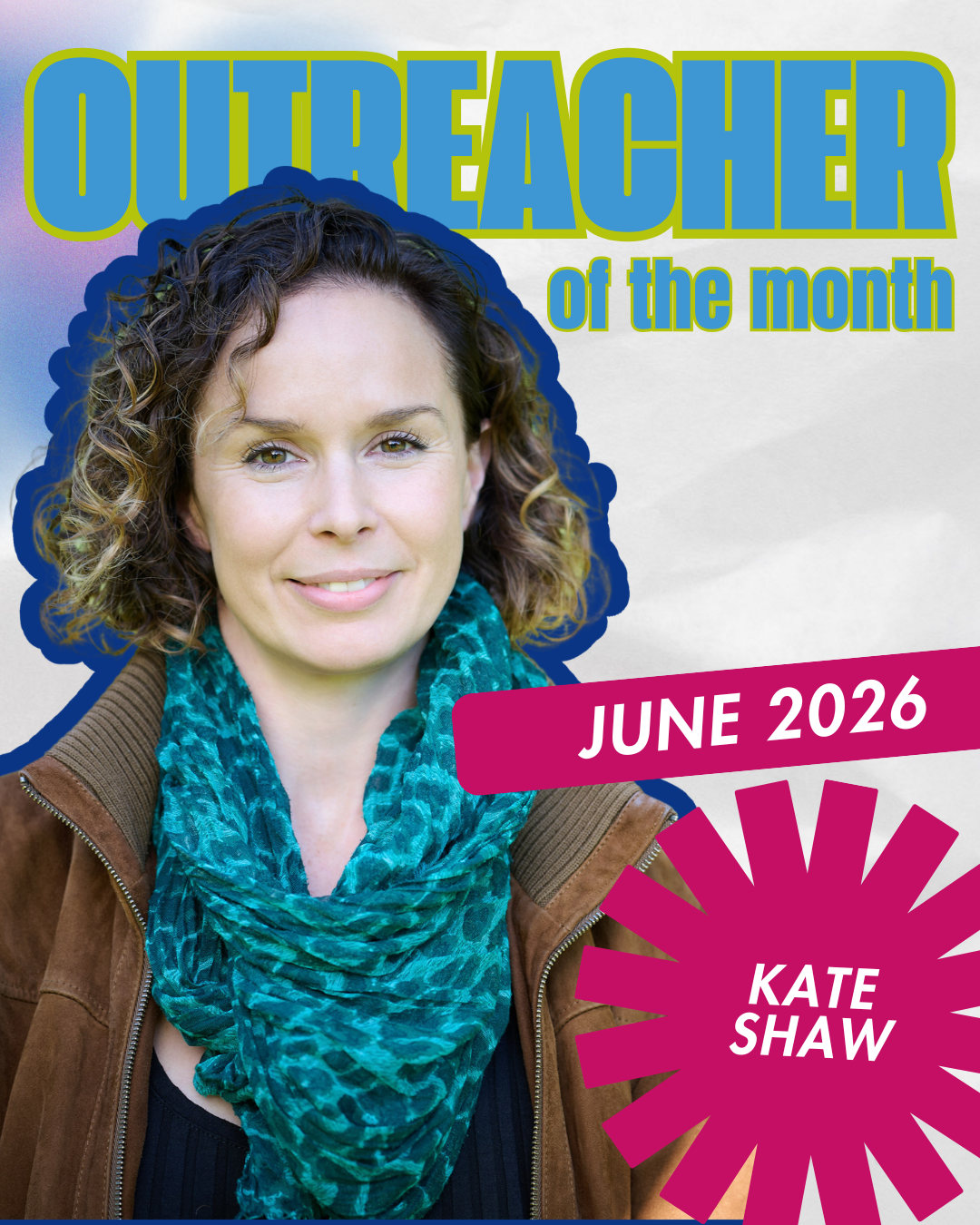
This month, IPPOG is delighted to feature Kate Shaw, Associate Professor at the University of Sussex, experimental particle physicist working on both the ATLAS experiment at CERN and the Deep Underground Neutrino Experiment (DUNE), and founder of Physics Without Frontiers. Many members of the IPPOG Collaboration had the pleasure of meeting Kate during our recent Collaboration Meeting in Slovenia, where she gave an inspiring talk on neutrinos and shared her passion for making particle physics accessible to everyone.
In this interview, Kate reflects on what first inspired her to become a physicist, explains why neutrinos remain one of the greatest mysteries in particle physics, and talks about her commitment to expanding opportunities for young physicists worldwide through Physics Without Frontiers
1. Could you briefly introduce yourself and tell us about your current role?
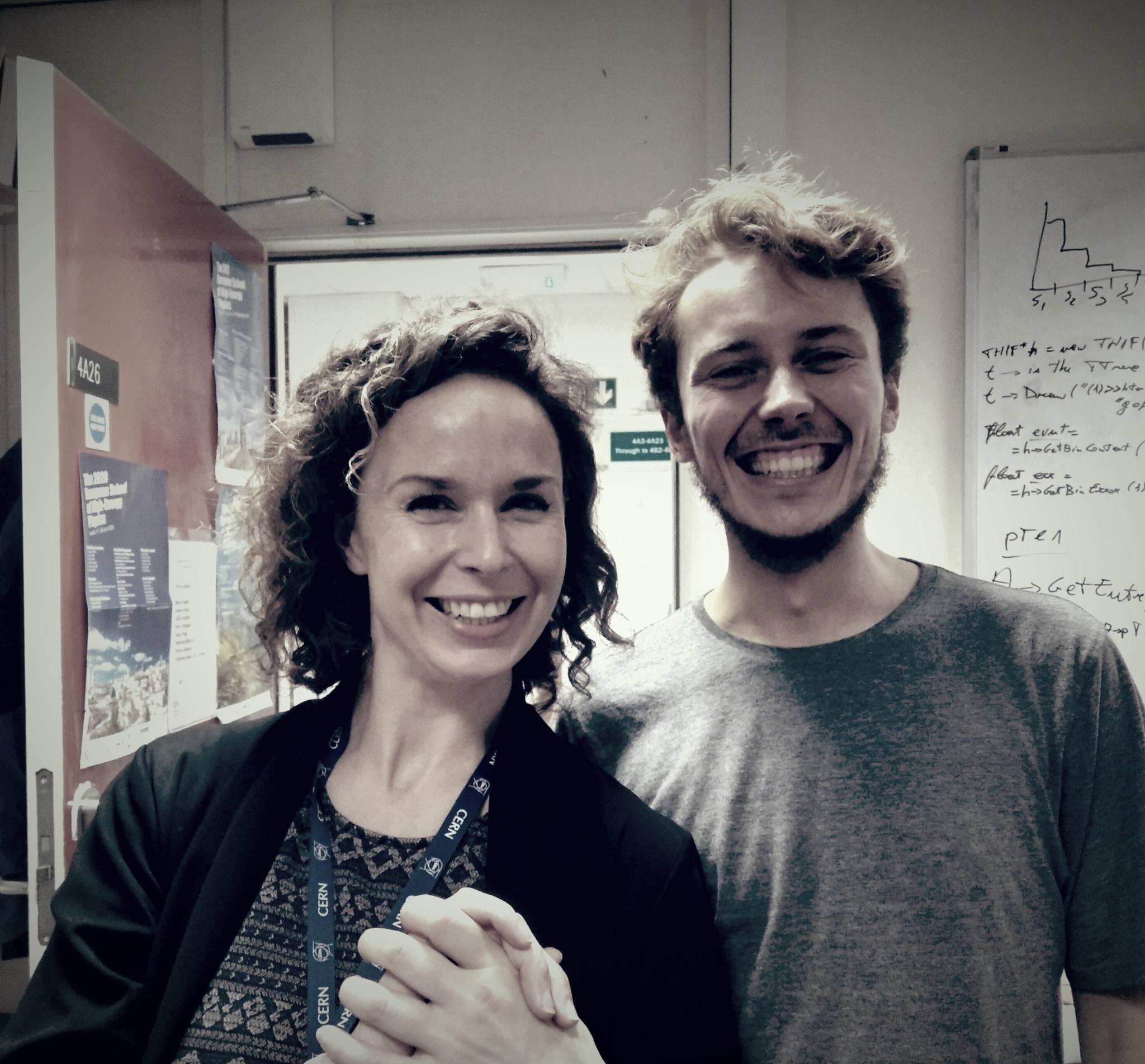
Hello, Im Kate Shaw, Im an experimental particle physicists lucky enough to work on both the ATLAS experiment, and the Deep Underground Neutrino Experiment. I am an associate professor at the University of Sussex and I consult at the International Centre for Theoretical Physics (ICTP), where I run Physics Without Frontiers.
2. What first inspired you to pursue a career in particle physics?
I grew up reading books around the house and the public library on philosophy and physics, and when I was 10 years old I read Stephen Hawking’s Brief History of time. His book blew my 10 year old mind and that same day I decided I wanted to be a physicist when I grew up. I am just fascinated with our universe, why everything is the way it is and how it all works together so beautifully.
3. At the recent IPPOG Collaboration Meeting in Slovenia, you gave a wonderful talk about neutrinos. What makes these elusive particles so exciting to study?
Neutrinos are fascinating and mysterious! They are everywhere and nearly interact with anything, billions going through even our finger tips every second, and yet we know so little about them! They are the only particle on the standard model that have outstanding issues which we have yet to resolve, and thus are very likely to hold the key to New Physics! We study neutrinos from outa space, from supernova and blackholes, and from accelerator beam made, try to understand how they oscccilate as they travel, understand the difference between neutrinos and anti neutrinos, and finally resolve the issues of their masses! And neutrinos might hold teh answer to ne of the biggest questions we have - why do we live in a matter dominated universe, and there is hardly any antimatter!
4. You are also actively involved in Physics Without Frontiers. Could you tell us a little about this initiative and what motivates your outreach work?
I founded Physics Without Frontiers back in 2012 during my first postdoc at ICTP, which is today their flagship international outreach programme. The initiaves goal is to help build the next generation of physicists around the world, and in particular in regions that have less access to physics research, training and opportunities. The programme supports physicists from countries in the Global South to organise training, workshops, seminars and schools for university students in their countries to inspire students with current physics research, provide cutting edge training, and mentor top students to further study!
I want everyone around the world to have opportunities to engage with research and do further study, and by building the Physics Without Frontiers Network physicists around the world work together to help make this happen!
5. What has been your most memorable outreach experience, and what did you learn from it?
Being on the BBC Breakfast News show last Spring 2025 was very exciting for me. I got to speak to millions of people in the UK while they ate their breakfast about the Deep Underground Neutrino Experiment, and why neutrinos are so fascinating to study. Preparing for that - trying to work out how to communicate affectively to a brand audience was a real challenge that I really enjoyed! And I love to get our research out to those who may not usually have access.